- As 2027 approaches, unresolved questions about succession, regional balance, and power-sharing will inevitably resurface.
The recent assurance by the Orange Democratic Movement (ODM) party leader Oburu Oginga to Deputy President Prof. Kithure Kindiki that his position is not under threat adds a new layer of complexity to Kenya’s evolving political realignments.
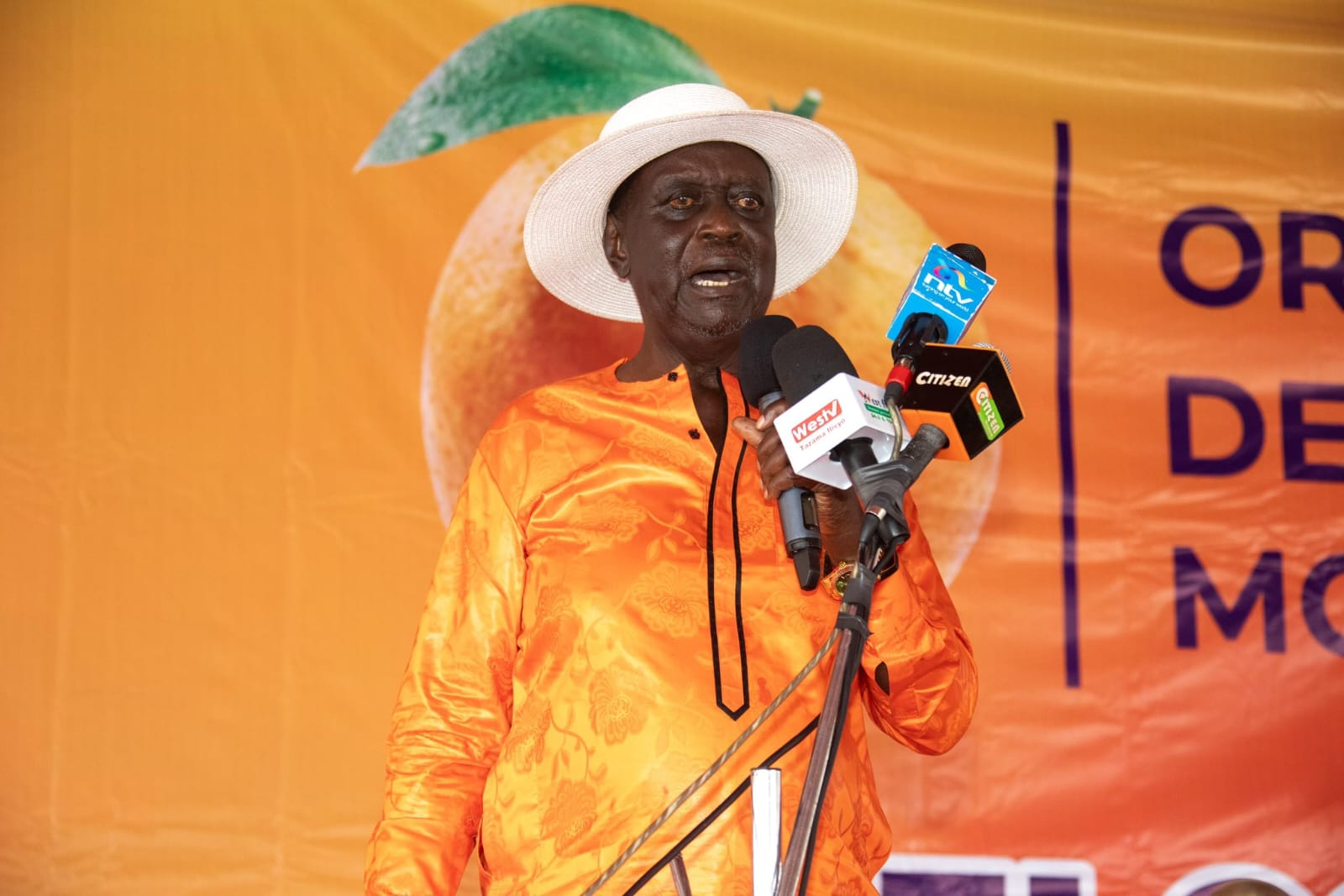
Speaking amid ongoing dialogue under the broad-based leadership pact, Oburu sought to dispel fears within government ranks:
“Deputy President, do not think that we want your seat or that we want to chase you away. You are our friend. Yet as we negotiate, we will negotiate for what our people deserve," Oburu recently said.
On the surface, the statement appears conciliatory—even reassuring. Yet beneath it lies a delicate political balancing act that speaks volumes about the nature, direction, and limits of cooperation between ODM and the government ahead of the 2027 General Election.
This assurance comes against the backdrop of earlier, more hardline positions from within ODM. Senior party figures had publicly stated that ODM would not settle for anything less than the Deputy President position in any meaningful power-sharing arrangement.
Read More
At the same time, the Siaya Senator Oburu Odinga has repeatedly argued that cooperation with the government offers ODM greater leverage heading into 2027—suggesting that engagement, rather than confrontation, is the smarter political currency of the moment.
The contradiction is not accidental. ODM appears to be pursuing a dual-track strategy: one that reassures the government of stability while keeping its base convinced that the party is negotiating from a position of strength.
By publicly affirming Kindiki’s security, Oburu calms fears of internal destabilization within the executive. By emphasizing negotiations around “what the people deserve,” he leaves the door open for concessions that may not necessarily involve formal titles but still carry political weight.
The question, however, is whether this cooperation is a bridge to reform or merely a temporary truce driven by political convenience.
ODM risks appearing indistinct if cooperation is not tied to visible policy wins or structural reforms that resonate with its supporters.
Conversely, remaining outside government influence entirely would limit its ability to shape outcomes during a politically sensitive economic period.
From the government’s perspective, ODM’s inclusion offers short-term stability and a broader legitimacy base—especially at a time when public trust in institutions is under pressure. But stability built on ambiguity has its limits.
As 2027 approaches, unresolved questions about succession, regional balance, and power-sharing will inevitably resurface.
Ultimately, the cooperation between ODM and the government is less about Kindiki’s seat and more about positioning.
ODM is testing how close it can move to power without fully owning government failures, while the ruling coalition is gauging how much accommodation it can offer without unsettling its internal hierarchy.
Whether this pact matures into a durable political realignment or collapses under the weight of unmet expectations will depend on clarity, transparency, and tangible outcomes.
Without these, the dialogue risks becoming a holding pattern—calm on the surface, but quietly turbulent beneath—until the inevitable jostling of 2027 begins.
Stay connected with us on WhatsApp and TikTok for instant updates and breaking news as it happens.