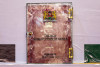
- The strategy aims to advance evidence-based traditional, complementary and integrative medicine and provides guidance on regulation and multi-stakeholder collaboration.
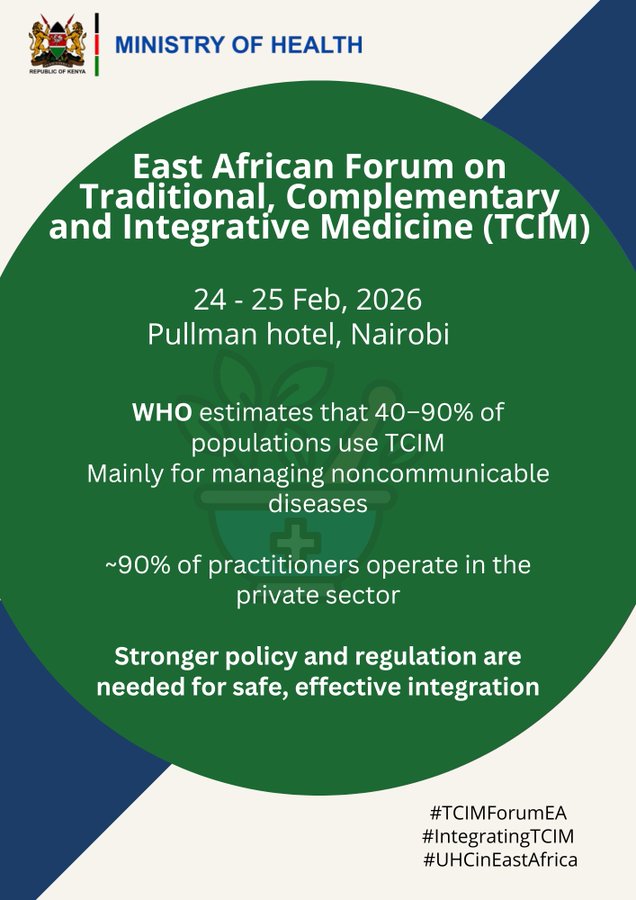
The Ministry of Health will host a two‑day Regional Dialogue on Harmonising Policy and Regulatory Approaches for Traditional, Complementary and Integrative Medicine (TCIM) on Tuesday, February 24, and Wednesday, February 25, 2026, at the Pullman Hotel in Nairobi.
The forum will bring together partner states of the East African Community (EAC) to strengthen collaboration and advance the structured integration of TCIM into national health systems. Regional policymakers, regulators, researchers, and practitioners are expected to attend.
The Ministry has noted that stakeholders will convene to advance policy and regulatory frameworks for the safe and effective integration of TCIM. Discussions come at a time when reliance on traditional and complementary medicine remains significant across populations.
Citing the World Health Organisation (WHO), the Ministry highlighted that 40–90% of populations use TCIM, largely for managing noncommunicable diseases, with nearly 90% of practitioners operating in the private sector.
Read More
Building on Global Momentum
The Nairobi dialogue builds on the Second WHO Global Summit on Traditional Medicine, held in December 2025 in New Delhi, India. That summit brought together policymakers, practitioners, scientists, and Indigenous leaders to deliberate on the implementation of the WHO Global Traditional Medicine Strategy (2025–2034).
The strategy aims to advance evidence‑based TCIM and provide guidance on regulation, research, and multi‑stakeholder collaboration.
At the regional level, the East African Forum on TCIM has previously highlighted regulatory gaps within partner states. The Ministry stressed the urgent need to strengthen policy and governance structures to ensure quality assurance and patient safety.
“Enhancing governance, regulation and collaboration will promote quality, safety and public confidence, while advancing people‑centred, integrated healthcare across the region,” the Ministry stated.
Expected Outcomes
The Nairobi dialogue is expected to produce actionable recommendations that will guide EAC partner states toward harmonised standards. These outcomes will reinforce the role of TCIM within mainstream healthcare delivery systems while safeguarding public health.
Stay connected with us on WhatsApp and Facebook for instant updates and breaking news as it happens.