
The National Irrigation Sector Investment Plan (NISIP) outlines five strategic pathways to transform Kenya’s agriculture. It will begin by mapping and modernizing public irrigation schemes, while empowering more than 2,500 smallholder schemes to boost productivity.
Joel Tanui, the Secretary for Land Reclamation, Climate Resilience, and Irrigation Water Management, speaking on behalf of Cabinet Secretary (CS) for Water, Sanitation, and Irrigation Eric Mugaa, told Kenyans that the country can no longer depend on rain‑fed agriculture.
“We must move beyond conventional methods,” he said, stressing that bold innovation is the only way to restore dignity and achieve Zero Hunger.

Read More
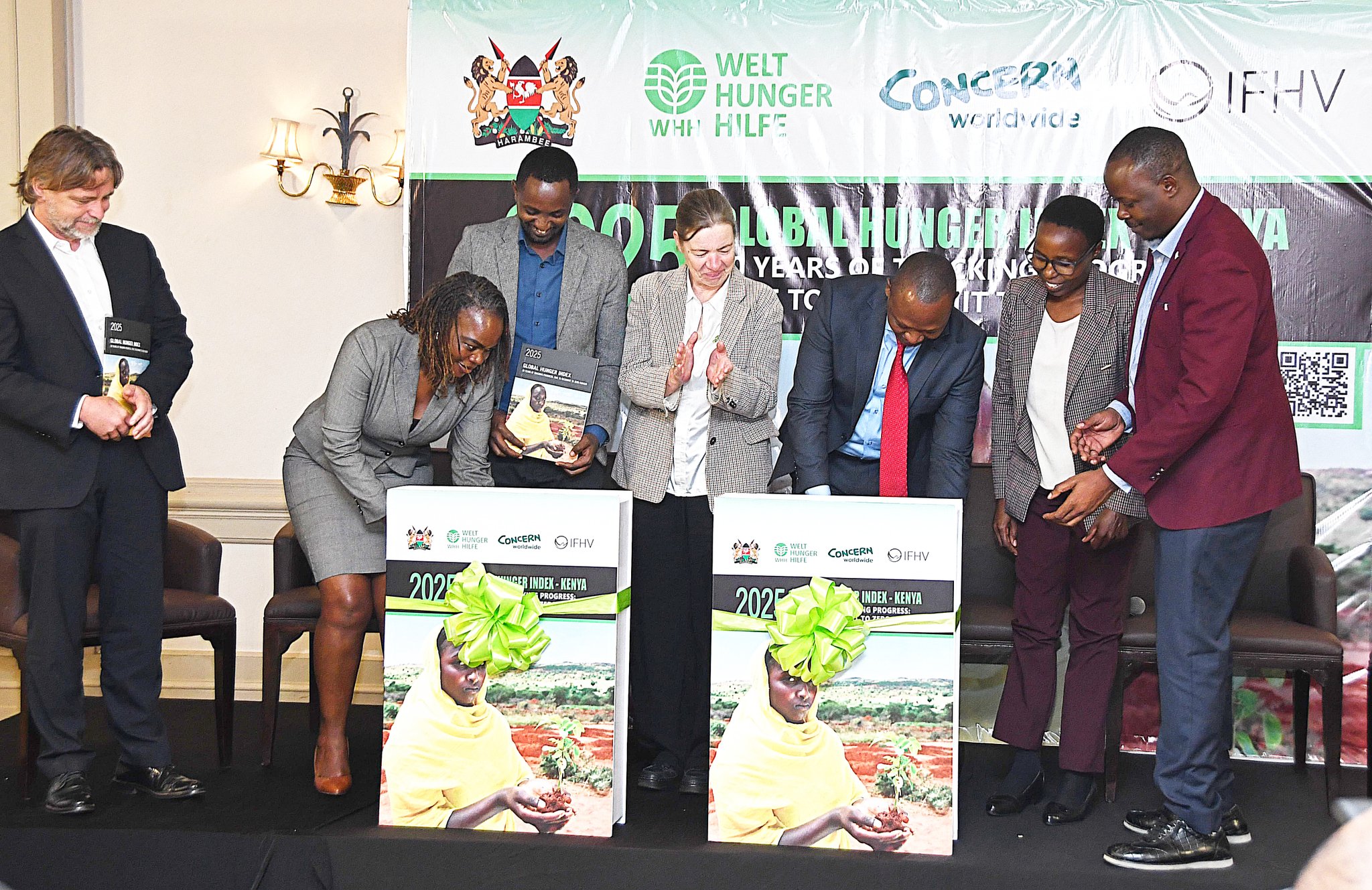
His remarks came during the launch of the 2025 Global Hunger Index Report for Kenya in Nairobi on March 17, 2026.
The report, presented by Welthungerhilfe (WHH), Concern Worldwide, and local partners under the theme “20 Years of Tracking Progress: Time to Recommit to Zero Hunger,” highlighted that one in three Kenyans faces hunger.
The Ministry of Water, Sanitation and Irrigation noted in a statement that food systems remain under immense pressure from climate change, economic disruptions, and geopolitical challenges, underscoring the urgency of Tanui’s call.
NISIP: Kenya’s Transformative Blueprint
At the center of this shift is the National Irrigation Sector Investment Plan (NISIP). The plan requires roughly KES 598 billion.
The National Irrigation Sector Investment Plan (NISIP) outlines five strategic pathways to transform Kenya’s agriculture. It will begin by mapping and modernizing public irrigation schemes, while empowering more than 2,500 smallholder schemes to boost productivity.
The plan also prioritizes the development of Arid and Semi‑Arid Lands, which make up 80% of the country. Flagship projects include the 3,000‑acre Daua Irrigation Cluster in Mandera, designed to expand irrigated farming.
In addition, de‑risking funds will enable farmers to access modern irrigation technologies, and idle land will be converted into large‑scale agribusiness ventures to drive growth and food security.
Idle land will also be converted into large scale agribusiness ventures.
Mega Dams to Boost Irrigation
Tanui reaffirmed President William Ruto’s directive to construct 50 mega dams, alongside hundreds of medium, small, and micro dams. The initiative is expected to bring more than 2.5 million acres under irrigation.
These projects aim to create jobs, reduce food imports, and strengthen resilience against drought.
Urgency Amid Rising Hunger
The urgency is clear. Climate threats are escalating, and hunger is worsening. According to the Global Hunger Index, undernourishment affects 36.8% of Kenya’s population.
The 2025 Index ranks Kenya 103rd out of 123 countries, with a score of 25.9—classified as “serious hunger.”
Nearly one in three Kenyans, about 20 million people, go to bed undernourished. This regression, not seen in 25 years, reflects stalled progress caused by climate change, economic shocks, and geopolitical instability.
A Call for Collective Action
Tanui urged all stakeholders to unite—government, private sector, communities, and partners like Welthungerhilfe. The goal is a future where every Kenyan eats with dignity.
The launch signals a decisive pivot. The path to Zero Hunger is no longer a distant dream. It is an urgent, collective mission already underway.


-1773832678-md.jpg)




-1773832678-sm.jpg)