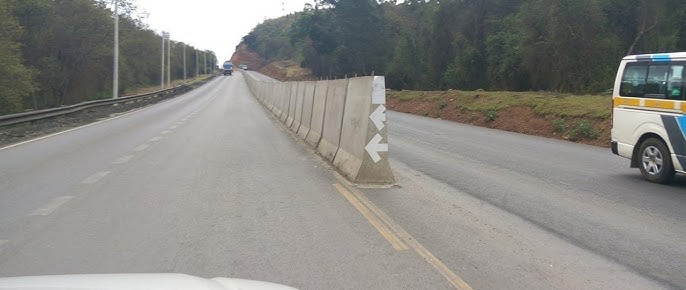
- Salgaa, a bustling transit town in Rongai Sub‑County, Nakuru County, sits strategically along the Nakuru–Kisumu–Eldoret Highway, about 27 kilometres west of Nakuru town.
If you’ve ever driven the Nakuru–Eldoret highway at night, you know Salgaa never sleeps. Its floodlit garages, and endless convoys of trucks make it a town built by the road itself.
Salgaa, a bustling transit town in Rongai Sub‑County, Nakuru County, sits strategically along the Nakuru–Kisumu–Eldoret Highway, about 27 kilometres west of Nakuru town.
Its position on one of East Africa’s busiest transport corridors has shaped not only its economy but also its national profile.
Local oral tradition holds that the name “Salgaa” comes from the Kipsigis words Sal (to praise) and Gaa (home), loosely interpreted as “praising one’s home.” Whatever its linguistic roots, the town’s identity has long been tied to the rhythm of the highway.
Day and night, Salgaa hosts an unending stream of long‑distance trucks, buses, and private vehicles ferrying fuel, agricultural produce, and manufactured goods bound for Kenya and neighbouring countries — Uganda, Rwanda, South Sudan, and Tanzania.
Read More
This constant movement has transformed the town into a fully fledged 24‑hour economy. At any given hour, eateries serve weary drivers, mechanics work under floodlights repairing trucks, and traders restock supplies in anticipation of the next convoy.
For many drivers, Salgaa is not just a stopover but a crucial resting point before tackling the long journey ahead.
The town’s strategic location has also fuelled the growth of a thriving commercial and light industrial sector. Fuel stations, warehouses, transport yards, lodgings, and retail businesses line the highway, while informal traders depend almost entirely on the steady traffic flow.
Residents often say business rarely sleeps in Salgaa, with peak activity striking late at night when heavy trucks dominate the road.
Yet Salgaa’s name became etched in national memory for tragic reasons. The town sits on a steep, winding descent that has long tested the skill and discipline of motorists, particularly drivers of heavy commercial vehicles.
For decades, the stretch was synonymous with grisly road accidents, some involving multiple vehicles and resulting in devastating loss of life.
The frequency of crashes earned the area a permanent black spot designation, complete with bold warning signage urging drivers to slow down.
Road safety experts have repeatedly pointed to overspeeding, brake failure, driver fatigue, and poor vehicle maintenance as the main culprits.
In several cases, trucks lost control while descending the slope, crashing into roadside businesses or oncoming traffic and leaving destruction in their wake.
The accidents not only claimed lives but also disrupted livelihoods, forcing residents to rebuild businesses multiple times after crashes.
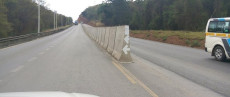
Public outcry eventually pushed the government to act. Authorities introduced traffic‑calming measures — speed bumps, rumble strips, clearer signage, weighbridge enforcement, and increased police patrols.
Combined with stricter enforcement of traffic regulations, these interventions have led to a noticeable decline in fatal accidents, turning Salgaa into a case study frequently cited in road safety discussions.
Today, Salgaa is gradually redefining its identity. While memories of its dangerous past still linger, residents and investors point to improved road safety, expanding commercial activity, and a growing industrial presence as signs of transformation.
What was once viewed solely as a perilous stretch of road is now increasingly recognized as a resilient town built by the highway — one that continues to learn from its past while positioning itself as a key economic hub in the Rift Valley and the wider East African transport network.
Stay connected with us on WhatsApp and TikTok for instant updates and breaking news as it happens.