
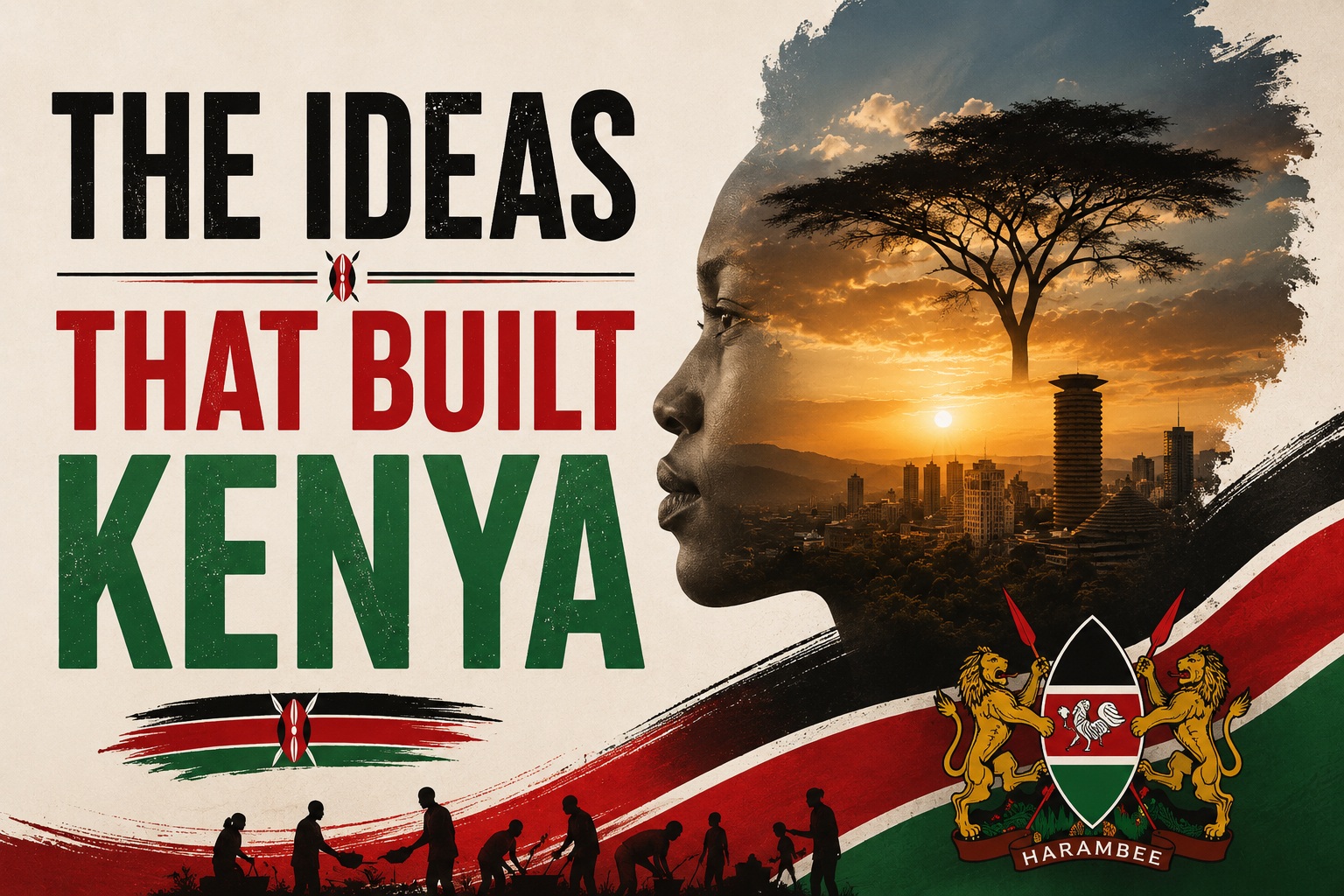
From Harambee and Nyayo to Utu, African Socialism, and the modern slogans Wantam and Tutam, Kenya's political philosophies have influenced how citizens think about leadership, unity, and accountability. This feature explores the origins, meanings, and lasting impact of the ideas that have shaped the country's political and social identity from independence to the present day.
The nation’s identity draws on many of the characteristics that the philosophy or saying brings, such as unity, responsibility, and collective progress. A few are really well known for their impact.
The philosophy known as Harambee (”Pulling Together”) is basically an idea that focuses on working together and helping within a community. Jomo Kenyatta, the first president of Kenya, introduced it in 1963, and it quickly gained official recognition as the national motto and even showed up on the Coat of Arms.
People organized Harambee events to raise money for various things like schools, clinics, weddings, and even funerals and school fees. It also helped extend the government's efforts. Moreover, this system created a spirit of self-reliance and national solidarity that was not divided by ethnic lines.
President Daniel Arap Moi, Kenya’s second president, came up with the term Nyayo (”Footsteps”) in 1978. He believed that the way forward in the country's development must be the way Jomo Kenyatta had done. It meant peace, love, and sticking together. During political handovers, it was used as a tool for promoting national unity and social harmony.
African Socialism was one of the main ideas that Sessional Paper No. 10 (1965) presented. It basically wanted to grow the economy while respecting the traditions and values of African people as a basis for economic development.
Read More
It emphasized the right to rule yourself, being accountable to the people and helping them, and having different kinds of economic activities. The underlying idea was to allow growth to happen in a way that would not bring about bad divisions such as different classes, and also to provide equal opportunities to all.
In Swahili, Utu (”Humanity”) is almost the same thing as Ubuntu, which translates as "I am because we are". It’s a very strong belief in the goodness and the care of every human being. People of East Africa rely on Utu for everyday social life and for solving problems in one's community. It reminds everybody that a person’s existence is closely linked with a greater community’s existence.
Recently coined by Gen Z protesters and other opposition factions around 2024-2025, the term Wantam comes from the meaning of “one term”. It conveys the general public’s frustration and the need for a new generation in politics and greater accountability.
The phrase Tutam, meaning “two term”, is the counter-slogan used by supporters of a two-term presidency, as their point of argument is that a full two-term presidency should be the case regardless.
As you look at different aspects, from independence-era mottos to modern-day expressions of the youth, these concepts are still the glue through which Kenyans communicate and confront authorities, mixing old and new to achieve the nation’s growth.
From independence-era mottos to modern youth expressions, these concepts remain the linguistic and cultural glue Kenyans use to communicate, challenge authority, and navigate national progress—proving that trying to suppress or oppose these movements only causes them to dig in their heels and grow stronger.