
- Porous borders in areas like Mandera and Moyale complicate enforcement, yet Kenya remains ahead of many regional peers by maintaining a dedicated authority to fight counterfeits.
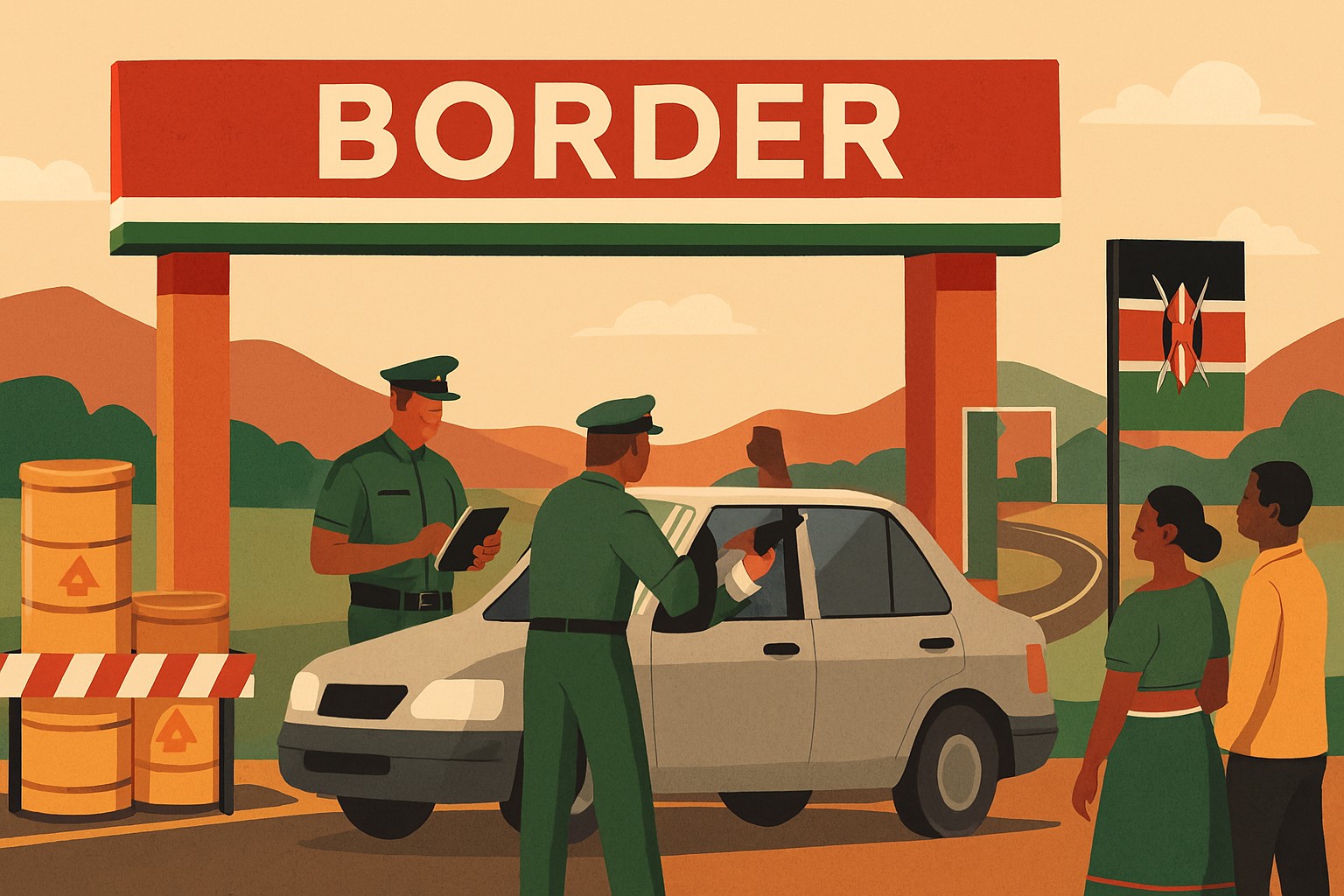
Kenya Police Service intercepted chemicals and explosives at the Isebania border on February 20, 2026, highlighting the ongoing challenges Kenya faces in safeguarding its borders from illicit consignments.
Operating from Isebania Police Station in Kuria West Sub‑County, officers stopped a white Toyota Probox suspected of entering the country through the porous Nyang’iti border from Tanzania. The driver escaped, but police recovered 12 drums of sodium cyanide and two cartons of explosives concealed in brown packaging.
.png)
This interception reflects more than an isolated seizure. It exposes the broader threats posed by cross‑border criminal networks and underscores the critical role of effective border management in protecting public safety and economic stability.
Read More
Kenya shares borders with five countries. Cross‑border trade contributes significantly to regional economies, but porous borders, limited surveillance infrastructure, and the sheer volume of legitimate trade create opportunities for smugglers and syndicates to exploit security gaps.
Director of Enforcement at the Anti‑Counterfeit Authority, Yussuf Osman, estimates Kenya loses KSh 150 billion annually to illicit trade, with counterfeit alcohol and agro‑chemicals among the most common threats.
Porous borders in areas like Mandera and Moyale complicate enforcement, yet Kenya remains ahead of many regional peers by maintaining a dedicated authority to fight counterfeits.
“We work with NACADA, county government, business institutions and others to ensure we have a counterfeit‑free country,” Osman affirmed.
Hazardous chemicals and explosives in illegal circulation raise the stakes. Sodium cyanide is extremely toxic and can cause mass casualties if mishandled. Explosives like V6 Explogel, designed for mining, can be repurposed for criminal or terror activities.
Their illegal movement across borders poses direct risks to human life, property, and infrastructure.
The Isebania seizure demonstrates the importance of vigilance and proactive policing. Officers acted quickly, preventing a potentially catastrophic incident. Their intervention signaled to criminals that Kenya’s security forces are prepared to disrupt illegal networks.
It also emphasized the need for continuous investment in border security infrastructure—modern detection technology, intelligence sharing, and personnel training. Strengthened patrols, advanced screening, and collaboration with neighboring countries can close gaps and prevent future attempts.
Border security protects more than lives. It safeguards Kenya’s position as a regional trade hub. Smuggling disrupts commerce, undermines investor confidence, and strains law enforcement resources.
Criminal syndicates often reinvest illicit profits into other illegal ventures, perpetuating cycles of crime that destabilize border communities. Securing borders ensures legitimate trade, stabilizes regional commerce, and shields communities from exploitation.
Public awareness remains essential. Citizens in border towns play a vital role by alerting authorities to suspicious activity. Collaboration among communities, police, and security agencies strengthens intelligence networks and enhances response capacity.
Transparency in reporting incidents, such as the Isebania seizure, reassures the public and reinforces trust in law enforcement.
Although the suspect remains at large, the recovery of chemicals and explosives underscores a broader lesson: Kenya must maintain vigilance, invest in modern border management, and foster regional cooperation. Illegal consignments threaten both citizen safety and national economic integrity.
Preventing such threats requires a multi‑layered approach—enforcement, intelligence, technology, and community engagement.
The Isebania interception proves that border security is essential for protecting lives, infrastructure, and economic stability. Kenya’s continued focus on securing its borders, disrupting criminal networks, and enhancing collaboration with neighbors is crucial for building a safer, more resilient nation.
Proactive interventions, like the one at Isebania, reinforce the principle that vigilance, preparedness, and decisive action remain the strongest defenses against cross‑border threats.
Stay connected with us on WhatsApp and Facebook for instant updates and breaking news as it happens.



-1771508867-md.jpg)





-1771508867-sm.jpg)