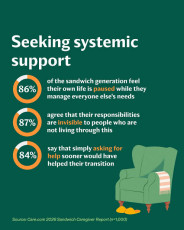
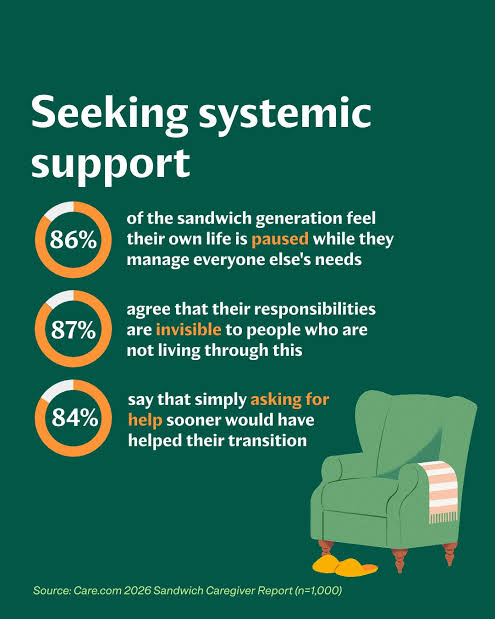
The sandwich generation describes adults caught between the responsibility of raising their children and caring for their aging parents. In Kenya, many middle-aged adults struggle to balance school fees, household expenses, medical bills and the needs of elderly parents amid the rising cost of living. Beyond financial pressure, they face emotional exhaustion, guilt and limited opportunities to pursue personal dreams, careers and investments. The situation highlights the need for shared family responsibility, supportive workplaces and affordable healthcare to ease the burden on caregivers. Ultimately, it raises an important question: Who takes care of those who spend their best years taking care of everyone else?
The sandwich generation refers to adults who find themselves caught between two major family responsibilities: raising their own young children while simultaneously caring for their aging parents. They are described as being sandwiched because they have responsibilities flowing in two directions: Upwards which is considered providing financial, emotional and physical support to aging parents. Downwards, it’s raising children, paying school fees, providing food, healthcare and ensuring their future.
At 5:00 a.m., while most people are still enjoying their sleep, Mary, a 42-year-old mother of two, is already awake. She prepares breakfast, checks her children's school uniforms, packs their lunch and gets ready for work. Before leaving the house, she makes a phone call to her 74-yearold mother, who lives in the village and depends on her for medication and daily expenses. Her day has barely started, yet she already has two generations depending on her.
In many African communities, taking care of parents is considered a cultural and moral responsibility. Children are often raised with the expectation that when their parents become old, they will support them in return. However, what happens when these expectations collide with the economic realities of modern life? School fees, household shopping, transport, medical expenses and rent compete for the same limited resources.
When an elderly parent develops a chronic illness requiring regular medication and hospital visits, the financial pressure becomes even greater. In Kenya, where many households already struggle with the rising cost of living, supporting two generations can turn an ordinary monthly budget into a constant financial battle. The challenge is not necessarily that these adults earn too little, but that their income is supporting too many people.
The sandwich generation is expected to remain strong even when they are physically and mentally exhausted. Their children need attention, their parents need companionship, and their workplaces demand productivity. They rarely have the freedom to admit that they are overwhelmed. There is the guilt of missing a child's school event because an elderly parent needs medical attention. There is also the guilt of spending money on personal needs when a parent is struggling with medical expenses.
The individuals carrying these responsibilities are often at a stage in life when they should be building careers, investing in businesses, travelling and pursuing personal ambitions. However, their priorities change. A promotion may be declined because it requires relocation. Further education may be postponed because school fees and medical bills come first. Business opportunities may be abandoned because the money is needed elsewhere. For some, even retirement planning becomes difficult because their income is continuously directed towards immediate family needs.
Families need to embrace shared responsibility. Siblings can contribute financially, take turns attending hospital appointments and provide emotional support. Couples should communicate openly about family obligations and household finances. Employers can also play a role by introducing flexible working arrangements that accommodate employees with caregiving responsibilities.
Additionally, accessible healthcare, affordable elderly care services and community support programs can reduce the pressure placed on individual families. Most importantly, caregivers must recognize that their own health and happiness matter. Taking a break, seeking help and pursuing personal ambitions should not be viewed as selfish acts. Their contribution is an expression of love, but love should not require the complete disappearance of one's identity, ambitions or happiness.
Perhaps the real issue is not whether adults should care for their children and aging parents. It is whether society has created enough support systems to ensure that this responsibility does not destroy the people carrying it.
As parents grow older and children grow into adulthood, the cycle of care continues. But somewhere between the demands of yesterday and the hopes of tomorrow, there is an individual whose own needs remain unanswered. When the children are finally grown and the parents are gone, what will remain of the dreams of those who spent their best years taking care of everyone else?