- When Sosian Energy’s plant was connected to the national grid in 2023, Governor Susan Kihika emphasized how the Menengai Geothermal Project will boost the county’s attractiveness. Sosian Energy Group—one of Kenya’s leading renewable energy companies—has anchored its geothermal power development here. Together with other partners, Menengai hosts three major plants, aiming to generate 105 MW of clean electricity by 2025.
If you reside in Nakuru, chances are you’ve hiked Menengai Crater—or at least dreamed of it. And if not, I hope you’ll find the chance someday, because this is no ordinary landmark.
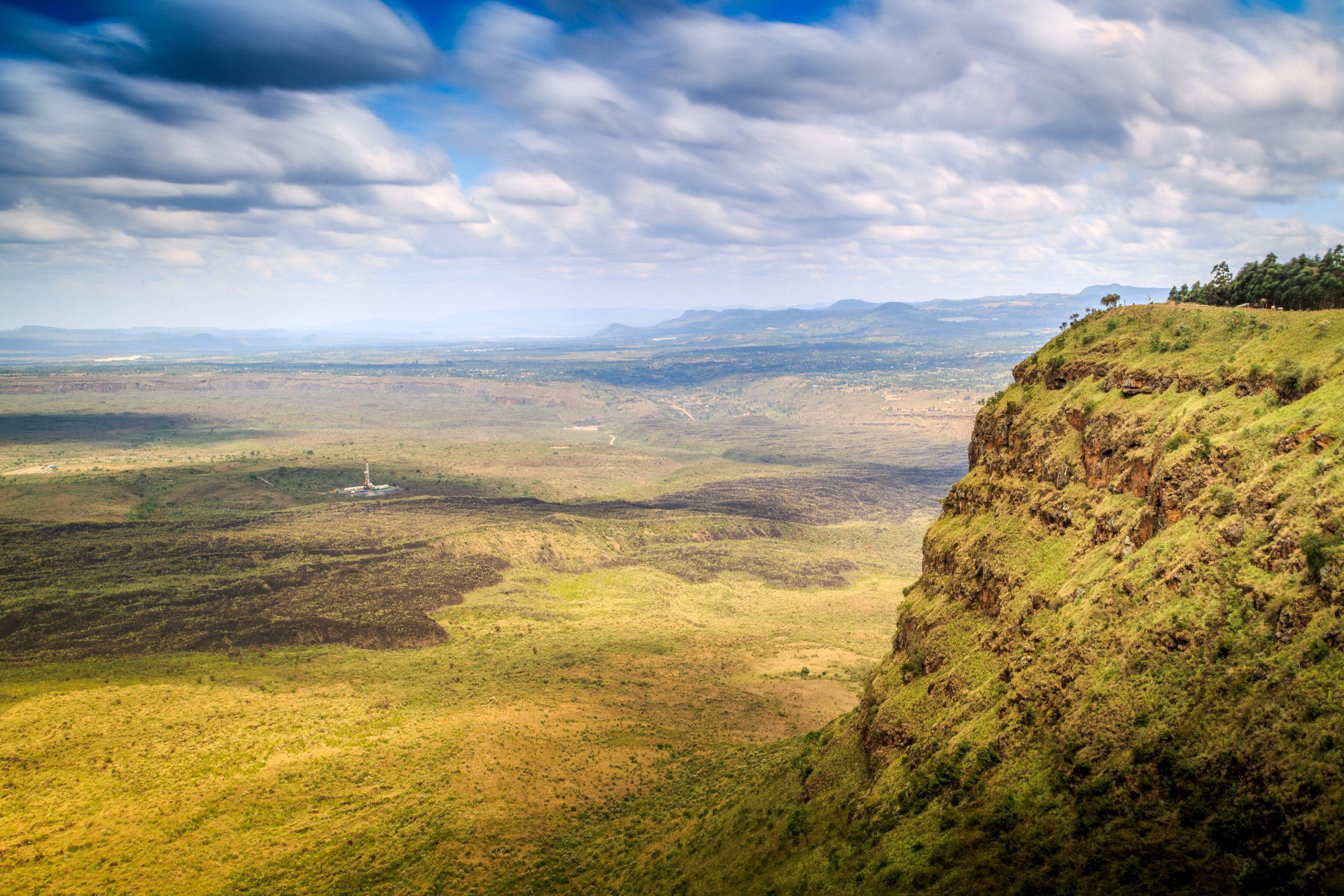
Menengai is one of the largest volcanic calderas in the world—so vast (12 km by 8 km wide) that standing at its rim feels less like gazing into a crater and more like peering into a sunken world.
Located just 10 km north of Nakuru town, it is easily reached via the Nyahururu–Nakuru highway. The main entry point, Menengai Viewpoint, offers sweeping panoramas of the caldera and the surrounding Rift Valley.
But Menengai is more than scenery. It is a living engine of Nakuru’s growth. Today, the same volcanic forces that shaped this vast caldera are being harnessed to power homes and industries through one of Kenya’s most ambitious geothermal projects.
There are currently three geothermal power plants planned under Phase I of the Menengai Geothermal Project. Each plant has a capacity of 35 MW, making a combined total of 105 MW.
When Sosian Energy’s plant was connected to the national grid in 2023, Governor Susan Kihika emphasized how the Menengai Geothermal Project will boost the county’s attractiveness. Sosian Energy Group—one of Kenya’s leading renewable energy companies—has anchored its geothermal power development here. Together with other partners, Menengai hosts three major plants, aiming to generate 105 MW of clean electricity by 2025.
This crater, however, is not only about energy. It is a geological wonder and cultural landmark with a history stretching back thousands of years. Formed by volcanic activity in the Rift Valley, Menengai’s caldera was born from a massive eruption about 8,000 years ago.
Oral traditions recall fierce battles between the Ilpurko Maasai and the Ilaikipiak Moran, with the Ilpurko victorious. Its name, Menengai, comes from the Maa language, meaning “place of the dead.” Legends say defeated warriors were thrown into the crater, and the rising steam represents their spirits trying to ascend to heaven.
In more recent history, the caves of Menengai sheltered Mau Mau fighters during Kenya’s independence struggle, adding political and cultural memory to its geological grandeur. To this day, locals regard it as a place of spiritual significance—haunted to some, sacred to others.
Today, Menengai is a magnet for hikers, adventurers, and tourists. Its rugged terrain, steam vents, and panoramic views make it one of Nakuru’s most compelling destinations. Beneath its surface lies one of Kenya’s richest geothermal fields, while above it stands a natural classroom for geology, ecology, and history.
Menengai Crater is Nakuru’s timeless jewel—a place where science meets folklore, where volcanic rock nurtures fertile farms, and where clean energy rises from ancient lava flows.
If you haven’t hiked Menengai yet, what would draw you there first—the views, the history, or the energy story?
Stay connected with us on WhatsApp and Facebook for instant updates and breaking news as it happens.