
-1785138388.jpg)
Edwin Sifuna’s Western Kenya homecoming revealed a changing political landscape where Raila Odinga’s influence still looms large, but a new generation is searching for its own voice. From massive crowds to citizen-funded support, Sifuna’s journey reflects the struggle to inherit a movement built over decades while creating a political identity of his own.
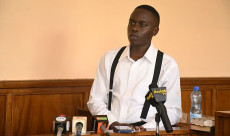
Nairobi Senator Edwin Sifuna returned to his Western Kenyan stronghold under the Linda Mwananchi banner on 25 and 26 July 2026. The gatherings went beyond a political reconnection. They revealed how power, money, and public choice entangle in Kenyan politics.
In Kiminini, Trans Nzoia, residents halted Sifuna’s motorcade and walked towards him carrying cash. The scene repeated at Bungoma’s Posta Grounds, where thousands assembled for his homecoming. Ordinary citizens pressed notes into his hands or passed them to his team—some giving as little as ten shillings.
By mid-July, the Linda Mwananchi campaign had already received KSh 519,000 from around 9,400 supporters, with an average contribution of about Ksh 55. Sifuna described the movement as “citizen-funded.” He pledged that if his side forms government, fuel prices would fall by Ksh 10 as repayment to those who financed the campaign.
The size of the crowds ignited intense social media discussion. Online figures and political watchers noted that “no one but Raila Odinga used to bring out this kind of organic crowd.” Many argued that Sifuna had become the first person since Raila’s death to generate comparable spontaneous turnouts in Western Kenya—“with or without offering the people money.”
A Reversal of the Usual Transaction
Read More
This marked a clear departure from recent Kenyan practice. Barely weeks earlier, the Ol Kalou by-election had been dominated by allegations of cash distribution, government-labelled mattresses, gas cylinders and other inducements. Sifuna’s team had effectively reversed the transaction: instead of people receiving money from politicians, they voluntarily handed money to one.
In the United States, debates often trigger donations. When a candidate performs strongly, supporters flood platforms such as ActBlue or WinRed with small contributions that begin during the live broadcast and peak over the following 24 to 48 hours. These funds help finance advertising and campaign infrastructure in a system with virtually no overall spending limits.
Sifuna’s Bungoma experience offered a Kenyan echo of the same idea—public approval expressed not only through physical presence but through citizens voluntarily offering cash.
Early Life and Political Rise
Edwin Watenya Sifuna was born on 22 May 1982 in Mumias, Kakamega County, into a Luhya family. After graduating with a Bachelor of Laws from the University of Nairobi in 2006, he completed his professional training at the Kenya School of Law in 2007 and was admitted to the Roll of Advocates the following year. He is a partner at E. Sifuna & Associates.
His political career was closely tied to Raila Odinga. In February 2018, at the age of 35, he was appointed Secretary-General of the Orange Democratic Movement, replacing Ababu Namwamba. He quickly became a sharp and loyal defender of the opposition. In the 2022 general election he won the Nairobi senatorial seat on an ODM ticket under the Azimio coalition, receiving over 700,000 votes and taking office on 8 September 2022. He also served as Senate Deputy Minority Whip.
After Raila: Ouster and New Path
The late Odinga’s death on 15 October 2025 created a political vacuum. Sifuna openly criticized ODM’s decision to join President William Ruto’s broad-based government.
On 11 February 2026, the party’s National Executive Committee removed him as Secretary-General. After legal challenges, the Registrar of Political Parties confirmed the removal on 9 July 2026. He also lost his position as Deputy Minority Whip.
Forced onto a new path, Sifuna launched the Linda Mwananchi movement and began county tours to test support for a possible 2027 presidential bid. The Western Kenya leg, culminating in the Bungoma homecoming, has so far provided the clearest evidence of his continued appeal and ability to mobilize without a traditional party machine.
-1785138388-md.jpg)


-1784793396-md.jpg)
 (1)-1784794030-md.jpg)
-1785138388-sm.jpg)



-1784793396-sm.jpg)