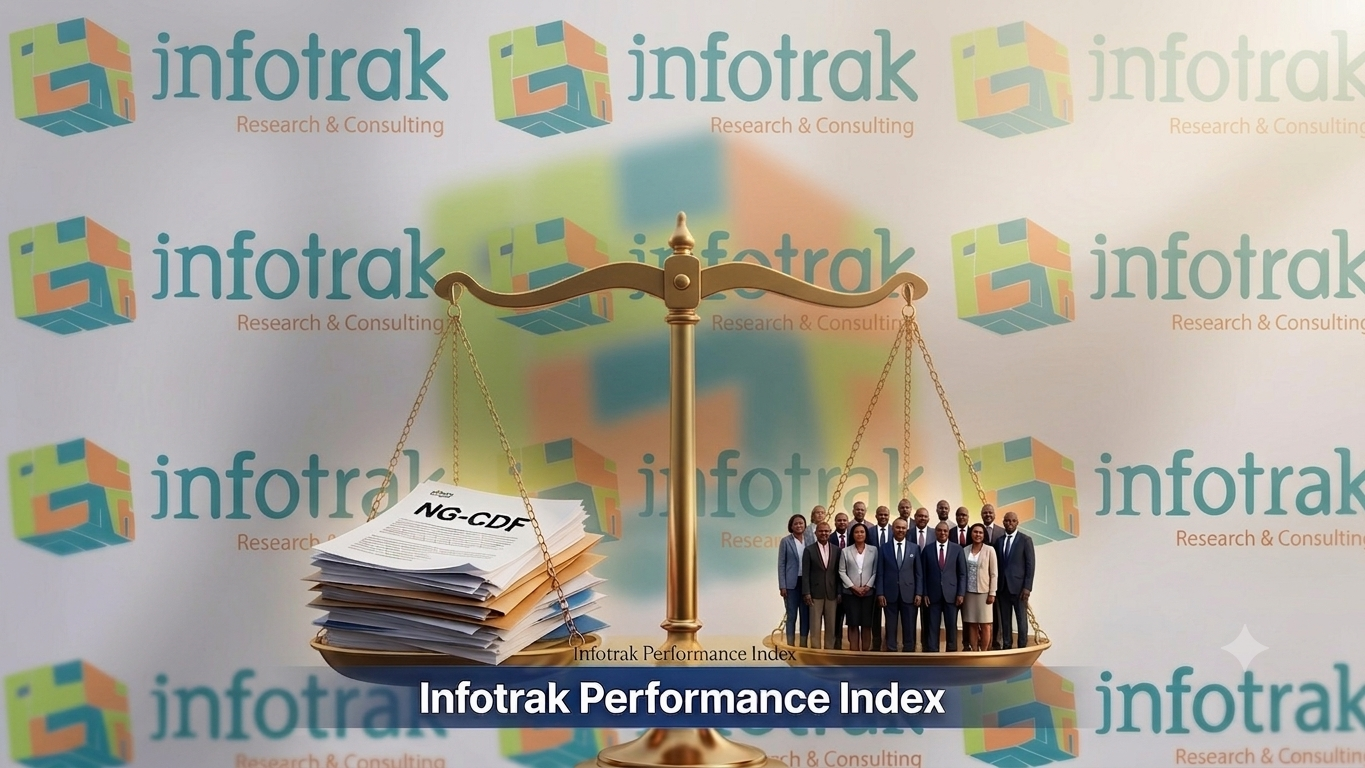
Infotrak’s exclusion of new MPs from its performance rankings creates a transparency gap in Kenya’s democracy. While defending methodological rigour, the article urges a balanced approach: combining strict indices with contextual reporting on new leaders’ prior experience to strengthen accountability from day one.
The recent omission of newly sworn Members of Parliament from Infotrack's Elected Leaders Performance Index highlights a recurring tension in Kenyan political accountability: the need to evaluate elected leaders rigorously while recognising the practical limits of assessing those who enter office mid-term.
Infotrack's choice to limit individual rankings to MPs who have served long enough to be assessed on legislative output, budget utilisation and other core metrics is defensible from a technical standpoint. Performance indices require comparable, verifiable data over a meaningful period to avoid distorting conclusions or unfairly penalising newcomers who have not yet produced measurable legislative or development outcomes.
Yet methodology alone cannot be the final word. Excluding new MPs wholesale from evaluation, risks creating a transparency blind spot at precisely the moment voters and stakeholders most need clarity. This blind spot matters for democratic accountability and for the practical governance of constituencies, especially where new MPs inherit ongoing projects, sensitive public funds or the legacy of politically consequential predecessors.
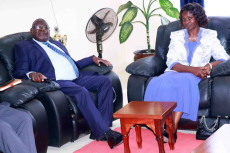
The Case of Hon. Moses Okoth Omondi
 Hon Moses Okoth Omondi's trajectory from a long-serving constituency NG CDF Manager to Member of Parliament for Ugunja illustrates the challenge policymakers, analysts and the public face in assessing performance.
Read More
On the one hand, an objective performance index that focuses narrowly on parliamentary attendance, motions sponsored, committee work, and direct disbursement records may legitimately defer judgment until sufficient comparable data are available.
On the other hand, Omondi's twelve years as Ugunja NG CDF Manager between 2013 and 2025 are material background that bears directly on questions of capacity, continuity and accountability. That experience should inform assessments of suitability to represent a constituency even before an MP completes a full year in Parliament.
Ignoring such a track record based on narrow temporal thresholds deprives voters and civil society of context that is both relevant and verifiable.
A Non-Binary Methodological Choice
Infotrack and similar organisations face a methodological choice that need not be binary. They can preserve methodological rigour while incorporating baseline contextual indicators for new office holders, including prior public-sector managerial records, documented oversight of public funds, and verifiable examples of constituency-level decision-making.
These contextual indicators would not replace the primary performance measures used in full evaluations, but they would provide the public with informed interim assessments that highlight both strengths and responsibilities as an MP enters their first year in office.
Such an approach reinforces the principle that accountability is continuous rather than confined to predetermined evaluation cycles. Democratic oversight should begin from the moment public office is assumed, even where comprehensive performance assessments require additional time to produce reliable conclusions.
What Democratic Accountability Demands During Transitions
Beyond methodological refinement lies a broader question: what should democratic accountability should emphasise when representation changes during an electoral term? Kenyan voters deserve to understand whether an incoming MP brings continuity that can preserve well-managed projects and institutional memory, or whether the transition introduces uncertainty in fund management and legislative advocacy.
Omondi's extensive experience within the NG CDF structure positions him to understand ongoing constituency programmes and the administrative processes necessary for effective project implementation. That experience is meaningful even if it does not immediately translate into parliamentary bills, committee reports or legislative rankings.
At the same time, civil society organisations, oversight institutions and citizens remain justified in seeking transparency regarding records of fund allocation, procurement processes and stakeholder engagement during his period of administrative responsibility.
Towards a Tiered Reporting Framework
For performance indices to remain politically credible and socially relevant, analysts must avoid two equally significant risks.
The first is drawing broad conclusions from limited data that cannot yet support meaningful comparison. The second is relying so heavily on methodological purity that important accountability gaps remain unaddressed during leadership transitions.
A balanced approach is for institutions such as Infotrack to adopt a tiered reporting framework that clearly distinguishes between comprehensive performance evaluations and contextual information about newly elected leaders.
Interim profiles could summarise verifiable managerial experience, publicly documented oversight responsibilities, and available records relating to financial management, administrative leadership, and community engagement, without assigning full performance ratings that require longer periods of observation.
Broadening Understanding of Leadership Preparation
The discussion also highlights the need for Kenyan institutions and civil society to broaden public understanding of what constitutes relevant preparation for elected leadership. Previous managerial experience should neither be dismissed as politically irrelevant nor accepted as an automatic guarantee of future success.
Administrative responsibility within constituency development structures is highly relevant because it involves public resource management, development planning and direct engagement with community priorities. However, that experience must always be accompanied by transparent documentation demonstrating responsible stewardship, sound financial management and accountability to the public.
An Opportunity to Strengthen Kenya’s Accountability Framework
Ultimately, the exclusion of newly elected MPs from Infotrack's current performance rankings should not be viewed simply as a criticism of the organisation's methodology. Rather, it presents an opportunity to strengthen Kenya's broader accountability framework by complementing rigorous performance indices with contextual reporting that reflects leadership transitions.
Comprehensive evaluations must continue to protect their methodological integrity, but they should also be accompanied by credible mechanisms that illuminate the experiences, responsibilities, and public records of newly elected representatives from the beginning of their tenure.
Where an MP assumes office after years of managing constituency development resources, that administrative history is not merely background information. It forms an essential part of the public record, enabling citizens to understand leadership continuity, institutional capacity, and accountability.
Share your story with us. For submissions, partnerships, or collaborations, reach out via [email protected], Facebook or LinkedIn.