-1774432042.jfif)
- In politics, words carry weight. Leaders are expected to guide, unite, and inspire. When they choose insults over ideas, they erode respect and trust. Every time President Ruto trades barbs with his former deputy, he loses more than he gains.
Sun Tzu’s book ‘The Art of War’ reminds us that the supreme art of war is to subdue the enemy without fighting.
This timeless principle emphasizes restraint, discipline, and the power of strategy over raw confrontation.
Victory, Sun Tzu teaches, is not about trading blows or words, but about maintaining composure, controlling the battlefield, and forcing the opponent to exhaust themselves. In leadership, the greatest strength lies in rising above provocation, showing maturity, and keeping focus on the larger mission.
Kenya’s recent political drama between President William Ruto and former Deputy President Rigathi Gachagua illustrates the cost of ignoring this wisdom. Their exchanges, once subtle, has escalated into open hostility marked by insults, body shaming, and bitter public barbs.
The Rift and Its Escalation
Read More
The differences between Ruto and Gachagua began soon after they took office.
Gachagua championed a controversial “shareholding” model that many Kenyans felt balkanized the country, while Ruto chose to remain relatively silent.
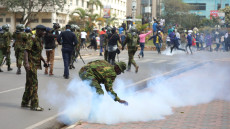
Tensions deepened in June 2024 during the Gen Z protests, when Gachagua was accused of fueling the unrest to undermine the president—a charge he denied. The fallout accelerated, culminating in October 2024 with Gachagua’s impeachment.
In response, he accused the government of treason and even claimed that attempts had been made to poison him, turning the political rift into a full‑blown crisis.
In March 2026, a series of increasingly personal and heated exchanges erupted between President William Ruto and leaders of the United Alternative Government. The confrontation was characterized by a shift from policy debate to direct verbal insults and body-shaming, marking a significant rise in political temperatures ahead of the 2027 elections.
Gachagua admitted he and his allies deliberately provoked Ruto to make him lose his temper. He argued that by responding with vitriol, the president demeaned the dignity of the office and exposed a lack of constructive agenda. Gachagua even advised Ruto to “stop being angry” and focus on issues like the cost of living, corruption, and the dignity of the payslip.
The Cost of Insults
In politics, words carry weight. Leaders are expected to guide, unite, and inspire. When they choose insults over ideas, they erode respect and trust. Every time President Ruto trades barbs with his former deputy, he loses more than he gains.
Citizens expect calm leadership, not emotional reactions. Even if provoked, responding in kind makes the president appear less composed. True leaders rise above petty arguments.
Insults also distract from urgent national issues. Kenya faces unemployment, rising living costs, and pressing development needs. When leaders focus on personal attacks, public debate shifts from solutions to spectacle. This wastes energy that could improve lives and leaves citizens frustrated.
Ruto’s responses often appear defensive. Constantly answering criticism with insults suggests insecurity. Strong leaders counter with facts, policies, and results. By choosing insults, he amplifies his opponent’s voice instead of weakening it, sometimes even boosting the rival’s popularity.
Such exchanges deepen divisions. Supporters take sides, tensions rise, and politics becomes a battlefield of disrespect. A president should reduce division, not fuel it. History shows that leaders who stay calm under fire earn more respect. Silence or measured responses project confidence and maturity, winning undecided citizens.
A Lesson in Leadership
Political disagreements are normal, but they should be resolved through constructive debate. When leaders focus on policies and ideas, they help citizens understand their vision. Trading insults reduces serious issues to personal battles, which stalls progress.
Every insult Ruto hurls at his former deputy chips away at his image, distracts from national priorities, and divides the country. As president, he has more to lose. His best path is to maintain dignity, focus on development, and answer criticism with results, not emotions. That approach would strengthen his leadership and earn lasting respect.
Stay connected with us on WhatsApp and Facebook for instant updates and breaking news as it happens.