- Independent presidential candidates in Kenya are a relatively modern phenomenon, emerging after the 2010 Constitution formally allowed such bids. Before then, every aspirant had to be nominated by a registered party.
In Kenya’s evolving democracy, the rise of independent presidential candidates has tested the limits of ambition, but history shows that without the machinery of political parties, State House remains out of reach.
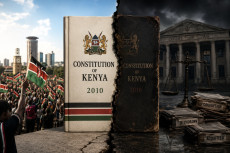
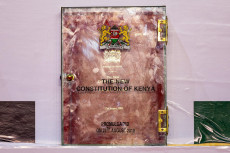
Independent presidential candidates in Kenya are a relatively modern phenomenon, emerging after the 2010 Constitution formally allowed such bids. Before then, every aspirant had to be nominated by a registered party.
In 1992, John Harun Mwau even founded the Party of Independent Candidates of Kenya (PICK)—a paradoxical “independent” party created to bypass the lack of a legal provision for true independents.
The first real test came in the 2017 general election. For the first time, three independent candidates met all requirements to appear on the presidential ballot.
Joseph Nyagah, a veteran politician and former minister, secured 0.07% of the vote in the repeat election. Japhet Kavinga Kaluyu, a U.S.-based professor, won 0.11%. Michael Wainaina Mwaura, a former Kenyatta University literature professor, garnered 0.08%.
Read More
Their presence marked a milestone, but their performance underscored the steep odds of running without party machinery.
By 2022, interest in independence surged. A record 47 individuals applied to run as independent presidential candidates. Yet none cleared the final hurdle set by the Independent Electoral and Boundaries Commission (IEBC).
Among them were Reuben Kigame, a gospel musician and activist; Jeremiah John Mwaniki Nyaga, son of the late minister Joe Nyaga; Nixon Kukubo, a perennial contestant and former military officer; and Esther Waringa, chair of the Independent Candidates Forum of Kenya.
Their exclusion reinforced the reality: independence in Kenyan presidential politics remains more symbolic than practical.
Parties as Pillars of Power
Political parties in Kenya are far more than seasonal vehicles for the ambitious; they are the foundational pillars of democratic legitimacy and the indispensable requirement for any realistic path to State House.
Skeptics dismiss them as temporary campaign machines centered on individuals, but the Constitution and electoral law tell a different story. To win the presidency, a candidate must move beyond popularity and harness the institutional power of a disciplined party.
The IEBC cements this truth by requiring every presidential aspirant to be sponsored by a registered party—or face the punishing hurdles of an independent run.
Parties like the Orange Democratic Movement (ODM) and the United Democratic Alliance (UDA) provide structure, identity, and policy platforms that voters recognize. They act as gatekeepers of competition, transforming diverse interests into cohesive national visions that command trust and legal standing.
Strategy begins at the grassroots. Ward and constituency structures become the “boots on the ground” for mobilization. Candidates rely on party machinery to conduct nominations and primaries, ensuring local leaders are invested in the ticket’s success. By building loyal networks nationwide, parties amplify the candidate’s message beyond Nairobi, echoing it in every village.
Winning the presidency is a mathematical challenge. Article 138 requires “50% plus one” of the total votes and at least 25% in more than half of the 47 counties. Only a robust party can coordinate simultaneous, multi‑regional campaigns to meet these thresholds while maintaining a consistent national brand.
History confirms this. Uhuru Kenyatta’s Jubilee coalition in 2013, William Ruto’s UDA in 2022, and Raila Odinga’s enduring ODM all demonstrate that institutional strength dictates outcomes. Independents, by contrast, have struggled to break through.
The Challenge of Building Parties
Yet building credible parties is fraught with challenges. Party hopping, weak ideology, and internal wrangles undermine cohesion.
Disputes over “Linda Mwananchi” highlight the threat of fraudulent actors hijacking goodwill for gain. ODM’s factional battles, forcing leaders like Nairobi Senator Edwin Sifuna and Embakasi East Member of Parliament (MP) Babu Owino into legal fights, expose vulnerabilities.
Candidates must not only build parties but also legally and politically ring‑fence them against sabotage.
Beyond campaigns, strong parties prepare candidates for governance. In Kenya, disciplined parties in Parliament are essential to pass budgets, approve appointees, and drive legislative agendas.
A candidate who ignores party structures may win headlines and temporary crowds, but only one who builds a disciplined, institutionalized party can win and hold the State House.
Independent runs may symbolize freedom, but in practice, parties remain the engines of legitimacy, mobilization, and governance. Future aspirants must move away from ethnic mobilization toward issue‑based politics that resonate with youth and marginalized groups. Strengthening parties is not just strategy—it is an investment in the resilience and stability of the Kenyan republic.
Stay connected with us on WhatsApp and Facebook for instant updates and breaking news as it happens.