The Kenya National Highways Authority (KeNHA) has announced plans to begin upgrading the 80-year-old Maai Mahiu escarpment road into a modern four-lane highway in January.
The project aims to ease persistent traffic congestion, improve road safety and reduce travel delays along one of Kenya's busiest transport corridors connecting Nairobi to the Rift Valley and Western Kenya.
The expansion is expected to improve the movement of goods and passengers, reduce transportation costs and support economic activities along the highway. It will also introduce improved drainage, wider curves, safety barriers and better road infrastructure.
However, motorists should anticipate temporary diversions, dust and controlled traffic flows during construction as engineers work to transform the steep escarpment route.
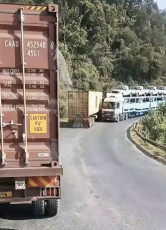
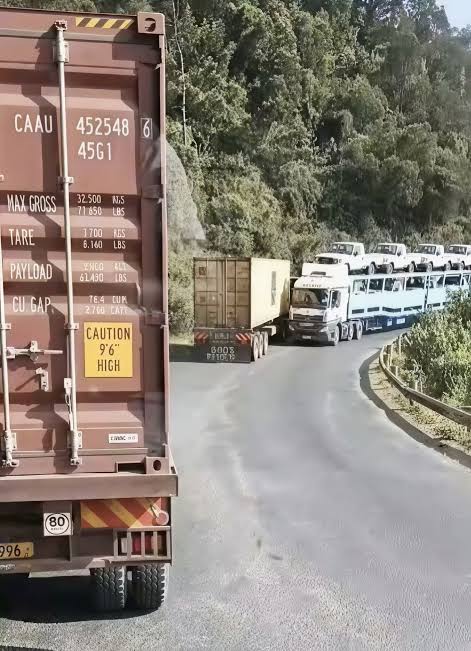
Anyone who has traveled between Nairobi and the Rift Valley knows the exact moment the journey slows to a crawl. Just past Limuru, where the cool highland air gives way to the dramatic drop of the Great Rift Valley, the highway narrows and begins its steep, winding descent toward Maai Mahiu. By late afternoon, a river of red brake lights stretches for kilometers along the cliffside. Heavy cargo trailers groan in first gear, passenger buses edge past blind corners and weary travelers stare at their watches, wondering whether a trip that should take an hour will swallow half their night.
For generations of Kenyan motorists, patience has been the single most important requirement for surviving this stretch of road. Now, long-awaited relief is finally on the way. The Kenya National Highways Authority (KeNHA) has announced that an upgrade of the 80-year-old Maai Mahiu escarpment road will begin in January, transforming the aging route into a modern four-lane highway built to ease decades of congestion.
To understand why this project matters so deeply to millions of people, one only has to look at the road’s history. Carved into the rugged walls of the escarpment roughly eight decades ago, the route was engineered for a completely different era. Back in the 1940s, motor vehicles in East Africa were few, trucks were far lighter, and the pace of regional trade was slow. Builders followed the natural curves of the steep hillside, creating a narrow, twisting passage that offered breathtaking views of the valley floor and Mount Longonot in the distance.
What was once an impressive engineering achievement, however, gradually became one of Kenya’s most notorious transport bottlenecks. Over the decades, Nairobi expanded into a bustling regional hub, towns across the Rift Valley and Western Kenya grew rapidly, and cross-border trade surged. Today, the escarpment road is far more than a local link; it is a vital artery connecting the capital to Nakuru, Naivasha, Narok, Kisumu, Eldoret, and neighboring landlocked countries such as Uganda, Rwanda, and South Sudan.
Yet this massive volume of modern traffic has continued to squeeze onto a narrow two-lane road designed eighty years ago. Every day, thousands of vehicles share steep gradients and sharp hairpin bends with almost no room for error. When a heavily loaded trailer loses power on an incline or suffers a mechanical breakdown on a tight curve, traffic behind it locks up within minutes. During rainy seasons, the challenge grows even worse as runoff water, thick mist, and falling rocks along the steep slope force drivers to slow to a snail’s pace.
The cost of these delays goes far beyond frustration behind the steering wheel. For farmers and traders transporting fresh vegetables, milk, and other perishable goods from the Rift Valley highlands to Nairobi markets, hours trapped in traffic can mean spoiled produce and heavy financial losses. Long-distance transport companies burn extra fuel while trucks idle on the hills, raising freight costs that eventually show up in the price of everyday household items. For ordinary commuters, students, and families traveling for work, medical appointments, or holidays, the escarpment has long turned routine journeys into exhausting tests of endurance.
Safety has been an equally urgent concern. Steep descents are unforgiving when heavy vehicles experience brake failure, and narrow shoulders leave little space for drivers to take evasive action. Over the years, accidents on the escarpment have claimed lives, destroyed cargo, and blocked the highway for hours while rescue teams struggled to reach the scene through gridlocked traffic.
At the foot of the hill, the bustling town of Maai Mahiu has lived by the unpredictable rhythm of the highway. For roadside vendors selling roasted maize, fresh fruit, hot tea, and bottled water, slow-moving traffic has long provided a steady stream of customers at car windows. Local mechanics, tire repairers, and small eateries also depend on drivers stopping to cool overheated brakes or rest before climbing the steep grade. While commerce thrives on movement, severe gridlocks often choke the town’s own streets, making daily life difficult for residents and local business owners alike.
The planned expansion into a four-lane highway promises to change the entire character of the corridor. Widening the road will allow slow-moving heavy trucks to climb and descend without trapping faster passenger cars and buses behind them. Modern highway engineering also brings wider curves, stronger safety barriers along steep drop-offs, better lighting in misty sections, and improved drainage systems to protect the road surface from heavy rains. Just as importantly, extra lanes mean ambulances, police, and breakdown recovery vehicles will be able to move quickly when emergencies happen.
Of course, transforming an ancient cliffside road into a modern four-lane highway will require patience in the short term. When construction crews move onto the escarpment in January, motorists should expect temporary diversions, dust, controlled traffic flows, and brief delays as workers cut into rock faces and reinforce slopes. Building on steep terrain while keeping a major national highway open is delicate work that demands careful planning and discipline from every road user.
Still, for millions of Kenyans who have spent countless hours staring at stationary tail lights on the edge of the Rift Valley, the sight of earthmovers in January will be a welcome one. For eighty years, the old escarpment road has carried the weight of a growing nation on shoulders built for a bygone century. When the upgrade begins, it will mark the start of a safer, faster and far less stressful chapter for everyone who crosses the great valley.