
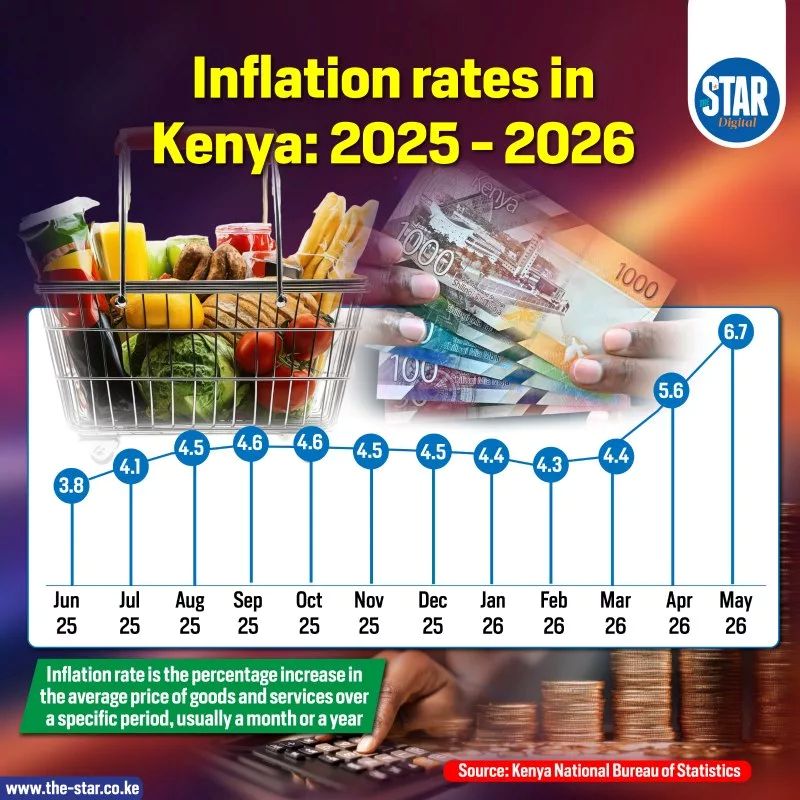
Kenya's annual inflation has climbed to 7.3 per cent, driven largely by higher food and transport costs.
Cost of Living Bites as Kenya's Inflation Hits 7.3 Per Cent in October
Inflation measures the overall change in the prices of goods and services over time. It does not necessarily mean that every commodity has increased in price by the same percentage. Rather, it reflects the average movement in prices across a selected basket of goods and services.
The latest rate of 7.3 per cent places inflation close to the upper limit of the government's medium-term target range of 2.5 to 7.5 per cent.
The last time Kenya recorded inflation at this level was in July 2023, when the annual rate also stood at 7.3 per cent.
The figures are likely to renew debate around monetary policy, household purchasing power, fuel pricing and the effectiveness of government interventions aimed at easing the cost of living.
For consumers, however, the immediate concern remains the ability to meet everyday expenses without sacrificing other essential needs.
As households adjust their budgets to accommodate higher prices, the latest inflation figures present a reminder that economic stability must also translate into affordability for ordinary citizens.
-1793394140-md.jpg)

-1793393704-md.jpg)




-1793393704-sm.jpg)