Kindiki hailed the deal as proof of a “true and enduring friendship” between the two nations.
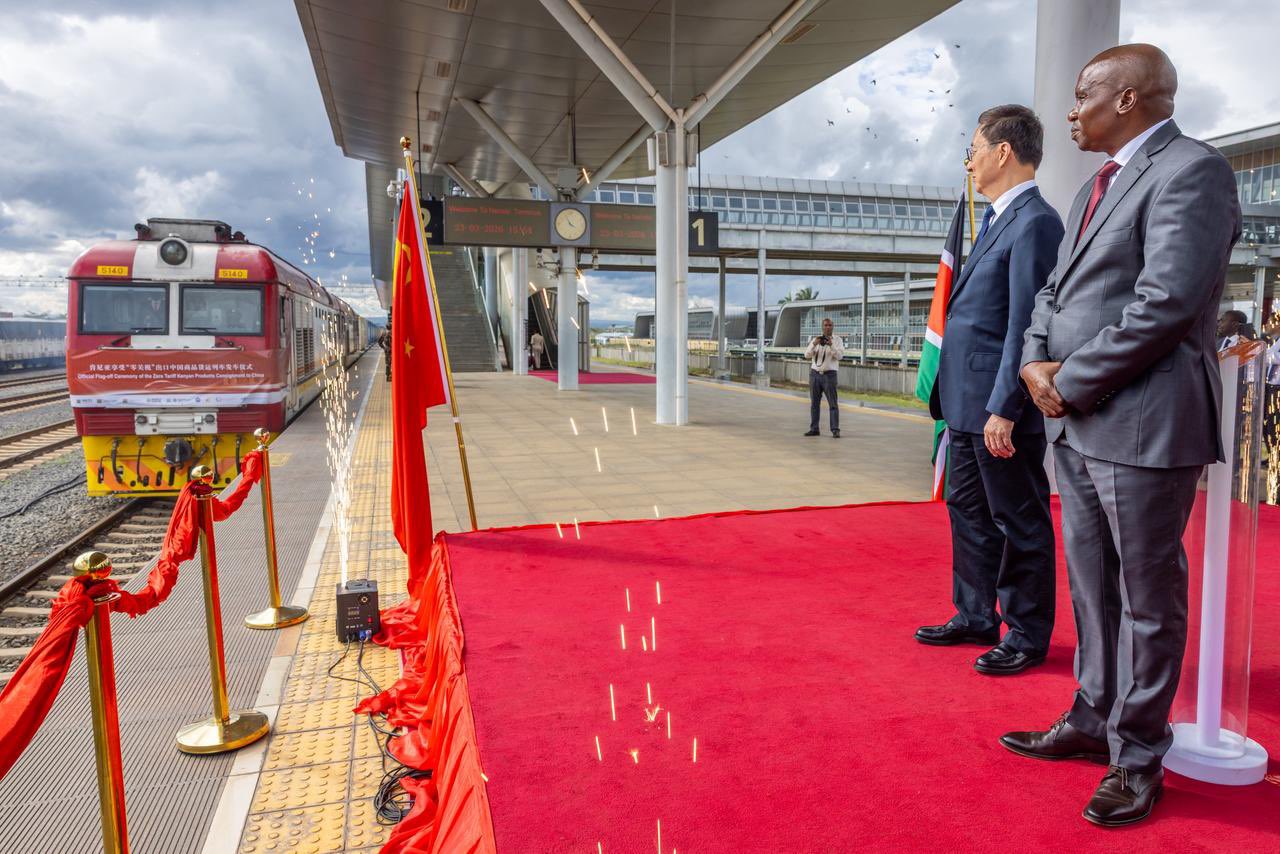
Kenya has entered a new chapter in its trade diplomacy with China. On March 23, 2026, Deputy President Prof. Kithure Kindiki and China’s Vice President Han Zheng jointly flagged off the first shipment of Kenyan goods under a zero‑tariff arrangement, signaling a milestone in bilateral relations.
Kindiki hailed the deal as proof of a “true and enduring friendship” between the two nations.
He emphasized that duty‑free access for Kenyan exports would directly benefit millions of farmers, traders, and export companies.
“Our coffee, tea, avocado, nuts, fruits, vegetables, flowers, and minerals will enter China at zero tariff, enhancing incomes across the value chain,” he declared in a post on X.
He framed trade as the surest path to wealth creation, adding that Kenya’s aspiration to achieve first‑world economic status is being realized “one step at a time.”
Read More
Kindiki called on the private sector to take full advantage of the preferential market access, noting that the agreement presents a timely opportunity to expand Kenya’s export footprint in the Chinese market of over 1.4 billion people.
China’s expanded zero‑tariff policy now covers 53 African countries, aiming to rebalance trade flows that have historically favored imports.
For Kenya, the framework offers a chance to narrow its Sh500 billion trade deficit and strengthen its competitiveness in one of the world’s largest consumer markets. By eliminating duties, Kenyan agricultural goods can reach Chinese consumers at more competitive price points.
The Cabinet Secretary (CS) for Investments, Trade and Industry Lee Kinyanjui described the policy as a game changer.
“This is a clear call to action for Kenyan farmers, manufacturers, and exporters. With improved logistics through the SGR and expanding market access, our products can now reach China faster and more competitively than ever before,” he said.
He pledged that the Ministry would guide and support businesses to meet standards and fully leverage the opportunity.
Yet success will depend on discipline. The Kenya Plant Health Inspectorate Service (KEPHIS) enforces strict phytosanitary standards, and the initial 54‑container shipment of fresh avocados and avocado oil underscored the importance of compliance.
On March 16, 2026, the Cabinet Secretary for Agriculture and Livestock Development Mutahi Kagwe confirmed that duty‑free entry for agricultural exports will begin on May 1, 2026, opening major opportunities for farmers and agribusinesses.
He urged Kenyan exporters to prioritize value‑added products and called for partnerships with Chinese firms to establish agro‑processing industries locally, strengthen value chains, and create jobs.
China’s Ambassador Guo noted that agricultural trade between the two countries continues to grow. In 2025, Kenya exported coffee and tea worth USD 24.46 million to China, alongside avocados and macadamia worth USD 19.9 million.
Kagwe directed KEPHIS to ensure all exports meet international and Chinese standards, stressing that quality control and traceability are non‑negotiable.
The Kenya Export Promotion and Branding Agency anticipates rising demand for tea and coffee, but warns of structural constraints. Kenyan exporters face stiff competition from other African countries enjoying similar preferential access. Inconsistent production volumes and gaps in cold chain logistics also pose challenges.
At the grassroots level, the zero‑tariff deal could transform livelihoods. Farmers stand to earn more, while jobs in logistics and processing could expand.
But the benefits will only materialize if smallholder farmers meet export standards, access financing, improve post‑harvest handling, and integrate into reliable value chains. Consistent quality, stable volumes, and durable market linkages will determine whether Kenya fully capitalizes on this historic opportunity.
Stay connected with us on WhatsApp and Facebook for instant updates and breaking news as it happens