-1787193556.jpg)
Kenya’s Beyond Vision 2030 dialogue arrives amid rising living costs, unemployment, strained public services and declining trust in political institutions. Its credibility will depend on whether it moves beyond political alliances to produce practical, measurable solutions that improve the lives of ordinary citizens
Cabinet Secretary for Energy and Petroleum Opiyo Wandayi and other leaders associated with the Orange Democratic Movement defended the Beyond Vision 2030 National Dialogue against opposition criticism. They describe it as an inclusive and voluntary process meant to gather ideas for Kenya’s long-term development.
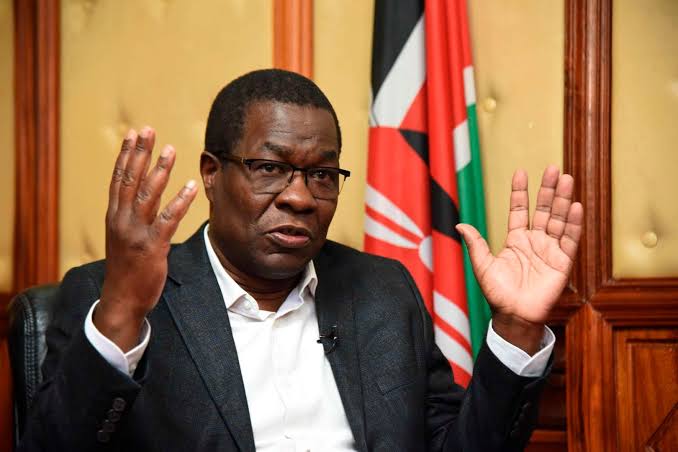
At a time when citizens are grappling with the cost of living, unemployment, strained public services, questions of national unity and declining trust in political institutions, any national conversation must be judged by the value it delivers to ordinary people rather than by the political identities of those promoting it.
The dialogue will serve Kenya only if it is open, credible, inclusive and firmly connected to the daily realities of citizens.
Energy, Cost of Living and Everyday Realities
CS Wandayi’s intervention places the dialogue within the broader debate on the cost of living. Energy sits at the center of household welfare, business viability and public service delivery. Electricity prices, fuel costs and supply reliability affect transport, food production, manufacturing, education and healthcare.
When the government presents energy interventions as part of its response to economic pressure, citizens are entitled to examine whether those measures are producing real improvements in their lives.
The energy sector cannot be treated merely as a political talking point. It requires sustained policy attention, institutional accountability and protection from decisions that place unnecessary burdens on consumers.
Households need affordable and reliable electricity. Small enterprises need predictable costs. Farmers and manufacturers need stable supply. Public institutions need dependable power to deliver essential services. These practical concerns must form part of any serious national discussion about Kenya’s future.
Wandayi’s role should therefore extend beyond defending government initiatives at political gatherings. He must clearly explain how energy policies are intended to improve citizens’ lives and how the public can hold the responsible institutions accountable.
Government claims should be backed by accessible information, transparent decision-making and regular progress updates. Citizens should not be expected to accept broad assurances without understanding the basis for those claims or their impact on daily life.
The cost of living is not an isolated issue. It is bound up with governance, taxation, employment, public spending, agriculture, transport and energy. A dialogue that treats these matters in isolation will struggle to address the roots of public dissatisfaction.
Citizens experience government as a single system; they do not separate the price of electricity from the cost of food, job opportunities from the quality of education, or public revenue from the state of roads and hospitals. The dialogue must therefore adopt a broad and practical understanding of economic welfare.
Political Alliances Versus Public Interest
The call for ODM supporters to consolidate within the broad-based government highlights the political dimension of the dialogue. Political parties have a legitimate role in shaping policy and mobilizing citizens. However, the interests of a political party must not be conflated with those of the entire country.
.jpg)
A government resting on a broad political arrangement must demonstrate that its decisions are guided by the public welfare rather than by political survival. Citizens will judge such an arrangement by its performance, fairness, accountability and ability to address their real concerns.
Beyond Vision 2030 should not become a vehicle for extending political alliances while sidestepping the issues that affect ordinary people. To command public respect, the process must create space for those who are not aligned with the government or ODM.
It should include voices from counties, civil society, professional bodies, faith communities, youth groups, women’s organizations, workers, business owners and communities that usually remain outside formal political discussions. Inclusion must be reflected not only in attendance lists but in the issues considered and the recommendations ultimately produced.
Leadership, Institutions and Accountability
Any discussion of Kenya’s long-term future must also examine the quality of leadership and public institutions. Development plans cannot succeed where corruption is tolerated, procurement lacks transparency, public resources are misused, or officials evade responsibility.
The country’s future depends not only on the projects governments announce but on the systems that determine whether those projects are completed, maintained and fairly distributed. Accountability must be treated as a central development priority rather than a charge levelled only at political opponents.
Public participation should not end when recommendations are published. The government should establish a clear mechanism for receiving, reviewing and responding to proposals.
Explanations of next steps and responsible institutions should accompany accepted recommendations. Reasons should accompany rejected proposals. Such transparency would help citizens see that their contributions have not vanished into an administrative void.
Credibility Depends on Openness to Criticism
The credibility of the dialogue will ultimately rest on the conduct of those promoting it. Leaders must be prepared to listen to difficult questions and accept that citizens may reject some of their proposals. Participation should never be framed as a test of loyalty to the government, ODM or the broad-based administration.
A person can support national development while questioning how a dialogue is organized. A person can welcome energy-sector interventions while demanding greater transparency from the institutions responsible for them. Democracy requires that these positions coexist.