 (1)-1784794030.jpg)
It began as suspicion. It became strategy. Today, it has evolved into a political doctrine embraced across Kenya's divide. From the chaos of 2007 and the digital battles of 2017 to the dramatic scenes witnessed in Ol Kalou, the story of "guarding the vote" is ultimately a story about trust, democracy, and the fear that elections can still be stolen.
When the former Deputy President Rigathi Gachagua came out in the Ol Kalou by-election to the press and told those present that voters should "fortify and barricade" election centers, a typical political reaction was the only one possible in Kenya's environment.
The IEBC, the country's autonomous body overseeing elections, quickly moved to deny claims that a fake results announcement and vote manipulation were behind Gachagua's allegations.
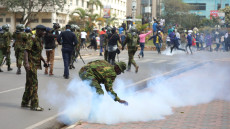
But it was the physical activities of the people going to the elections that spoke volumes about another situation. It was the people of Nyandarua who actually stopped the election process of their constituency from being spoiled by the masked men using unmarked cars who set off tear gas.
The extremely defensive and almost paranoid attitude is not a new idea. "The Guarding the Vote" is an idea that dates back decades and is a response to the fear that votes might be stolen during the elections by some people. To understand why the events in Ol Kalou happened the way they did, we would have to dig into the history.
1. The Start: When "Tuko Kadi" Revolutionised the Political World.
The notion of 'guarding the vote’ is politically connected to a time when grassroots voter protection efforts grew stronger, and such movements were actually given political weight.
The "Tuko Kadi" movement originally came out of a civic rallying cry that was meant to inspire the youth of Generation Z to take control of the politicians so that they wouldn't coopt the young people.
"Tuko Kadi" became a mental and spiritual shield that was meant to make a statement to the government and IEBC that the people were not merely passive voters and also not just waiting for the process to give them results from the hands but were actively monitoring the process.
They wanted to ensure that the democracy didn't fail, and were not going to trust the machinery of the state which they were already distrusting. Election integrity, which was the main reason why the whole process of the election was being carried out, which was a state machinery, in the absence of trust, was shifted by those people who had taken that initiative, that is, ordinary citizens.
2. The Ghost of 2007: The Ultimate Catalyst.
The paranoid mood surrounding vote counting in Kenya was permanently ingrained after the tragic 2007 general election. The Kivuitu-headed Electoral Commission of Kenya (ECK) threw the nation into unrest following a deeply flawed counting at the Kenyatta International Convention Centre (KICC).
The country's trauma, caused by the sudden swearing-in event at night, made it evident that it could happen, i.e., a vote counted in the morning was gone by midnight if it was not guarded properly. This event has haunted every election since 2007, changing the nature of 'guarding the vote' from being simply a political strategy to an imperative matter of national security for political parties.
3. "Adopt-a-Polling-Station" and the Digital Eras of 2013 and 2017.
With advances in technology, even methods of theft have advanced. The phrase became formalised structures such as "Adopt-a-Polling-Station" with both the 2013 and 2017 electoral exercises.
Political parties realised that ballot-stuffing was not the only form of theft through the physical ballot boxes; voting results were now changed digitally during transmission.
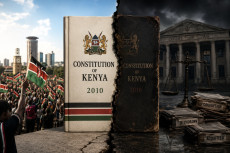
The historical moment of the 2017 Supreme Court annulment of the presidential election because of "irregularities and illegalities" in the IEBC transmission system turned out to be what was feared. It showed that without someone to check or independently tally the vote count, it is not possible to implicitly trust the official result.
4. Ol Kalou: The Tradition Reborn in the Mt. Kenya stronghold.
The Ol Kalou by-election is a special historical marker that we use to identify the different forms of vote-guarding that have been practised over the years.
Before this by-election, it was considered mainly a weapon of the opposition in their efforts to challenge the ruling authority by guarding the votes. For quite some time, voters in the Mt. Kenya region had placed their total confidence in the system, feeling sure that the machinery of the state was in their interests.
The big show of strength in Ol Kalou was an obvious indication of the shift on the ground. When people who have always voted for the side of the government suddenly go on the defensive about polling centres and demand independent tracking of KIEMS packs, we understand that their faith in the state's neutrality has completely eroded.
The Dangerous Loop: Civic Duty vs Institutional Decay.
Even though political parties consider 'guarding the voting' as a demonstration of the highest degree of civic commitment, political science is sounding the alarm about this trend.
When a nation's citizens have been made to rely solely on the presence of the voters themselves to guard ballot boxes, it is indicative of the total malfunction of the referee institutional system
As we march closer and closer to the 2027 General Election, it becomes very clear what lessons the people at both Tuko Kadi and Ol Kalou have taken. We understand that even technical tools such as KIEMS kits are just the equipment if the public still lacks confidence.
Until IEBC can fully ensure both physical and digital security, voters in Kenya will continue to follow the same rule, the ballot is only as secure as the citizens standing over it.