
-1784294612.png)
From Amboseli's wildlife plains to the booming estates of Kitengela and Ongata Rongai, Kajiado stands at the intersection of tradition and transformation. The county is balancing pastoral livelihoods, conservation and rapid urban growth while emerging as one of Kenya's most influential political swing regions ahead of the 2027 elections, where every vote could prove decisive.
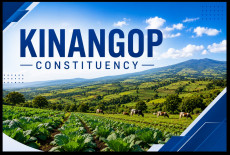
Kajiado County is a key part of Kenya's southern Rift Valley culture and economy. It is renowned for its vast conservation areas, Maasai heritage, and a thriving real estate industry that drives national tourism and metropolitan growth.
Politically, the county has remained a battleground, with Governor Joseph Ole Lenku shifting with the political tide and playing off the major national political coalitions.
The population of Kajiado County was 1,117,840 at the time of the 2019 Population and Housing Census, and its area is 21,900.9 km². The county is divided into five constituencies: Kajiado Central, Kajiado North, Kajiado East, Kajiado West and Kajiado South.
Demographics and Administrative Framework
Read More
2013: Dawn of Devolution
Gubernatorial Race: David K. Ole Nkedianye (ODM) triumphed as the first governor, securing 125,563 votes (48.04%) against runner-up Daniel Mpute Nina (URP) with 95,526 votes (36.55%) in the pioneering devolved election.
Senatorial Race: Peter Korinko Mositet (TNA) delivered a strong mandate, winning with 143,703 votes (55.63%) over Simon Peter Ole Nkeri (GNU), who received 69,574 votes (26.93%).
2017: Jubilee’s Rising Tide
Gubernatorial Race: Joseph Ole Lenku (Jubilee Party) rode a powerful wave to claim the governorship with 164,503 votes (54.12%), defeating incumbent David K. Ole Nkedianye (ODM) with 135,771 votes (44.67%).
Senatorial Race: Philip Mpaayei (Jubilee Party) captured the Senate seat with 162,112 votes, overcoming Daniel Tinaai Ole Tinaai (ODM), who polled 131,349 votes.
2022: Intense Showdown
Gubernatorial Race: In a nail-biting contest, Joseph Ole Lenku (ODM) staged a dramatic comeback, winning with 117,600 votes against Katoo Ole Metito (UDA), who had 111,725 votes, and third-placed David K. Ole Nkedianye (Jubilee) with 75,337 votes.
Senatorial Race: Samuel Kanar Seki (UDA) emerged victorious with 125,696 votes, defeating Judith Pareno (ODM), who garnered 99,882 votes in the fiercely competitive race.
Political Dynamics
The exclusively rural Maasai population has a strong interest in land rights, traditional leadership, and livestock policies. On the other hand, urban hubs such as Ngong, Kitengela, and Ongata Rongai have large commuter populations whose voting trends are similar to those of urban citizens nationally. The county is therefore an important swing region, with both the UDA and ODM/Azimio factions having strong bases.
Economy & Social importance
Livestock farming and pastoralism are the mainstays of the economy for rural communities. Because of its proximity to Nairobi, there has been a huge real estate boom in Kajiado North and East. The scenic Ngong Hills, Lake Magadi, and Amboseli National Park contribute significantly to revenue, with the latter being handed over to the Kajiado County Government to benefit residents. Kajiado is beset by structural problems despite its promising economic potential.
Climate change and extreme seasonal droughts are a major threat to pastoral livelihoods, as these areas are arid and semi-arid (ASAL). In addition, rapid urbanisation in border towns within metropolitan areas has put pressure on infrastructure, resulting in road congestion and waste management problems. There are also issues of land fragmentation and historical group ranching that remain sensitive throughout the county.
Do you have updates or corrections about this constituency? If you have information that should be captured, or notice data that has changed or is inaccurately presented, kindly write to us at [email protected].
-1784294612-md.png)
-1784098816-md.png)
-1784288382-md.jpg)

-1783933073-md.png)
-1784294612-sm.png)
-1784098816-sm.png)
-1784288382-sm.jpg)