
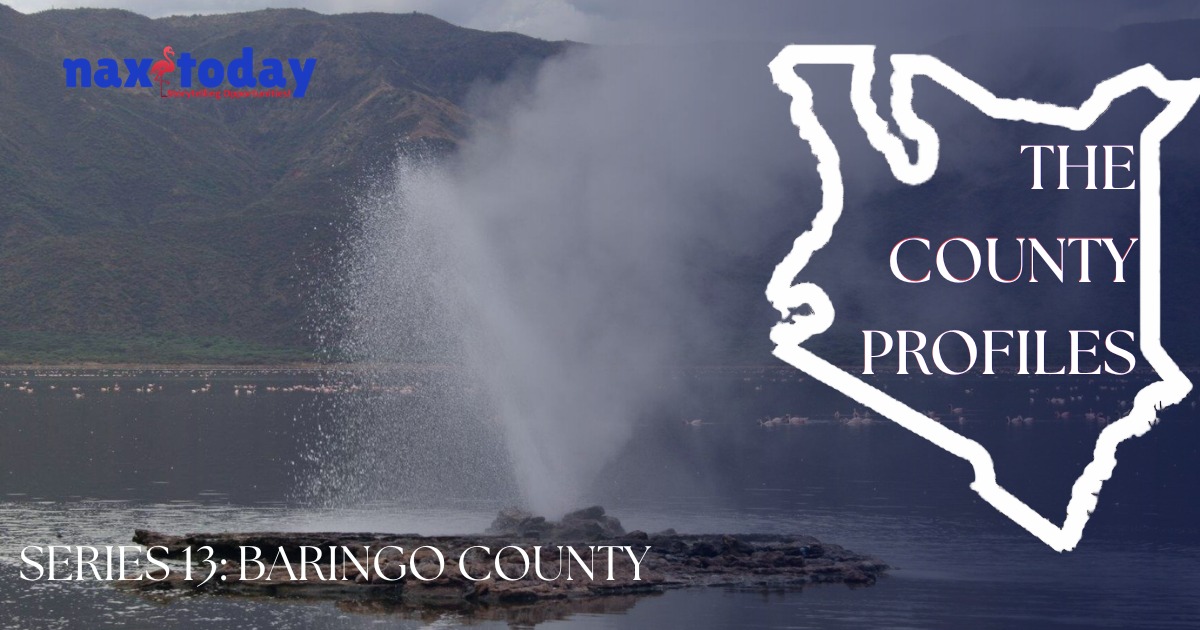
In Kenya’s Rift Valley, Baringo County stands as a land of striking contrasts vast arid rangelands, fertile highlands, scenic lakes (Baringo and Bogoria), and rich cultural heritage.
From its roots in pastoralism and agriculture to its ongoing challenges brought by banditry, climate variability, and infrastructure gaps. Baringo embodies resilience amid volatility. Its strategic location and resources position it as a key player in Kenya’s northern Rift economy.
Read More
County Identity and Demographics
Motto/Tagline: “County of Great Diversity”
This reflects the county's rich diversity in ethnic communities (including the Tugen, Pokot, Ilchamus and others), landscape (highlands, valleys, lakes, escarpements and semi-arid areas)
Area: ~11,075 km²
Population: 666,763 (2019 Kenya Population and Housing Census)
Projected Population (2026): ~730,000+
Headquarters: Kabarnet
City Status: No city status; growing urban centres include Eldama Ravine, Kabarnet and Marigat.
Constituencies: 6 — Baringo Central, Baringo North, Baringo South, Eldama Ravine, Mogotio, Tiaty and a total of 30 Wards
Members of Parliament (2022–2027)
| WARD | MCA | PARTY |
| Baringo Central | Joshua Chepyegon Kandie | UDA |
| Baringo North | Joseph Kipkoross Makilap | UDA |
| Baringo South | Charles Kamuren | UDA |
| Eldama Ravine | Musa Sirma Cherutich | UDA |
| Mogotio | Reuben Kiborek | UDA |
| Tiaty | William Kamket Kassait | KANU |
Political Election History
2022 Gubernatorial Election (Certified IEBC Results
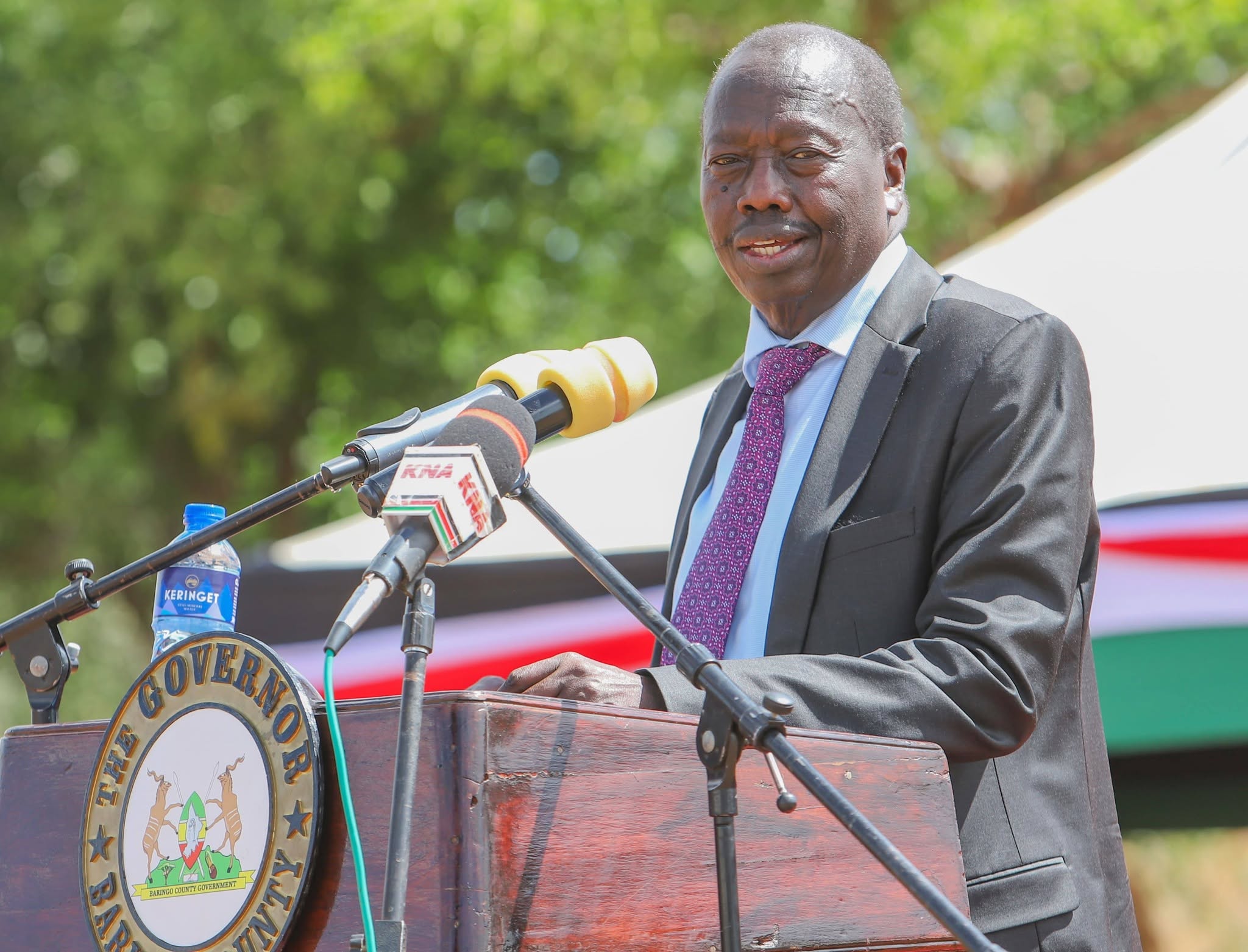
Governor: Benjamin C. Cheboi (UDA)
Deputy Governor: Charles Kipng'ok
Benjamin Cheboi and his deputy won the election with 137,486 votes. The key opponents were: Moses Lessonet (IND) who got 60,879 and Stanley Kiptis (IND) who garnered 17,646 .
The registered voters were 281,107 whereas the turnout during the elections was at 77.59%.
Shortly after the swearing-in, the Deputy Governor Charles Kipng'ok passed away and Felix Kipng'ok Maiyo was nominated and appointed as the Deputy Governor.
2017 Gubernatorial Election
Governor: Stanley Kiptis (Jubilee)
Deputy Governor: CPA Richard Koech
The 2017 General Election won by Jubilee party candidate, Stanley Kiptis and his deputy CPA Richard Koech with 137,176 votes. This was against their key opponent, Isaac Kiprop Chebon of KANU party garnered 52,176.
The registered voters were 232,311 whereas the turnout during the elections was at 82.29%.
2013 Gubernatorial Election
Governor: Benjamin Chesire Cheboi (URP Party)
Deputy Governor: Mathew Tuitoek
The first election of Governor of Baringo saw URP party candidate, Benjamin Cheboi win the election with 99,356 votes. KANU's candidate Stanley Kiptis became the second with 44,883 votes while independent candidate and Aaron Tuikong garnered 5,066 votes.
The registered voters were 174,136 whereas the turnout during the elections was at 90.00%.
Senate and Women Representative
2022
Senator: William Cheptumo (UDA) defeated the KANU chairman, Gideon Moi after winning with 141,177 votes. He was however succeeded by Vincent Kiprono Chemitei (UDA) via 2025 by-election following William Cheptumo’s death.
Women Rep: Florence Jematiah Sergon (UDA) defeated KANU's Gladwel Cheruiyot who occupied the seat after garnering, 144,039 votes.
2017
Senator: Gideon Moi (KANU) retained the seat after garnering 116,290 votes. He defeated Jubilee Party's Simon Chelugui.
Women Rep: Gladwell Cheruiyot (Jubilee) clinched the position after garnering 64,319 votes.
2013
Senator: Gideon Moi (KANU) won with 124,425 votes as the first senator of Baringo.
Women Rep: Grace J Kiptui (URP) won the seat with 118,163 votes.
Political Behaviour
Politics in Baringo County shows that voters expect accountability and results. Governors often serve only one term. For example, Benjamin Cheboi (2013–2017) and Stanley Kiptis (2017–2022) were both voted out, and Cheboi returned in 2022. This pattern shows that people want clear progress in areas like security, water, agriculture, and jobs for young people.
The same pattern is seen in the Women's Representative seat. Grace Kiptui won in 2013, Gladwell Cheruiyot in 2017, and Florence Jematiah Sergon in 2022 — none serving more than one term. This turnover highlights how voters consistently evaluate leaders against pressing development needs. As of 2026, projects in health, water, and agriculture continue, but scrutiny remains high, showing that Baringo’s electorate ties political loyalty directly to service delivery.
Economic Activities
Baringo’s economy is predominantly agro‑pastoral, shaped by its ecological diversity. Fertile highlands in Eldama Ravine, Baringo Central, and parts of Mogotio support rain‑fed maize, dairy, horticulture, and coffee revival. Mid‑zones and arid lowlands in Tiaty and Baringo South depend on livestock, irrigation, and resilience programs.
Agriculture & Crop Production
Agriculture is the backbone, historically contributing over half of the county’s gross product. Farmers grow maize, vegetables, fruits, and coffee, with renewed emphasis on agribusiness and value addition. Irrigation schemes in Marigat and Perkerra are central to climate resilience, while dairy, honey, and fruit processing link farmers to markets.
Livestock & Pastoralism
In arid areas, pastoralism sustains communities like the Tugen, Pokot, Ilchamus, and Endorois. Herds of cattle, goats, sheep, and camels are vital, alongside beekeeping. Challenges such as drought, disease, and insecurity drive partnerships with agencies like FAO, WFP, and NDMA to strengthen resilience.
Tourism & Blue Economy
Lakes Baringo and Bogoria anchor tourism, offering birdwatching, hot springs, and cultural experiences. Fisheries, especially tilapia and cage farming, diversify livelihoods. Tourism is closely linked to politics, as insecurity around these lakes often shapes voter sentiment.
Emerging Sectors
Small‑scale mining (diatomite, fluorspar), renewable energy (solar, geothermal potential), and agro‑processing SMEs are growing. Major investments in water infrastructure — boreholes, irrigation, and roads — are tied to both development promises and electoral accountability.
Outlook and Constraints
The 2023–2027 CIDP emphasises productivity, project completion, climate action, and youth empowerment. Partnerships with World Vision and the Kerio Valley Development Authority support these goals. Yet persistent challenges remain: banditry in Tiaty and northern areas, climate variability, poor market infrastructure, and limited value addition.
Do you have updates or corrections about this constituency? If you have information that should be captured, or notice data that has changed or is inaccurately presented, kindly write to us at [email protected].

-1780389498-md.jpg)

-1780389498-sm.jpg)