
In Rongai, the politics of maize fields and mushrooming estates collide — a highland constituency where agriculture and urbanisation define voter priorities, and shifting party loyalties make every election fiercely contested.
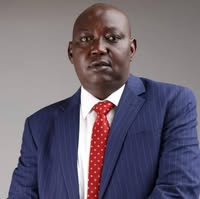
Hon. Paul Chebor, MP- Rongai Constituency|Photo Courtesy,Facebook.
Rongai Constituency is perched in Nakuru County, the Rift Valley region of Kenya. It was carved out of the larger Nakuru North Constituency following the promulgation of the 2010 constitution, which led to its first election in 2013.
The constituency is largely rural and semi-urban, so agriculture forms the backbone of the economy. Its mixed population of Kalenjin (mainly Nandi and Kipsigis), Kikuyu, and other communities also makes it politically competitive and diverse.
Demographics and Administrative Units
- Population: According to the 2019 Census Report, Rongai constituency has a population 199,906 (2019 census)
- Projected Population (2026):~215,000+
- Area: 251 km²
- Registered Voters (2022):~ 84,625
- Number of Wards: 5
- Ward names: Visoi, Menengai West, Mosop, Soin, Solai
Current Ward Leadership (MCAs 2022-2027)
| WARD | MCA | PARTY |
Solai | Nixon Morogo | Independent |
| Menengai West | Isaac Kiptisya | UDA |
| Soin | Elibas Naburuki | UDA |
| Visoi | Chemutai Hellen | UDA |
| Mosop | Alex Langat | UDA |
Political Leadership
2022: Paul Chebor (UDA) – Defeated Raymond Moi with 27, 021 votes.
Opponent: Raymond Moi (KANU) -14,715 votes.
2017: Raymond Moi (KANU) - 32,297 votes reclaimed his seat.
Opponent: Andrew Komen (Jubilee) - 25,390 votes.
2013: Raymond Moi (KANU) – 16,828 votes won the election.
Opponent: Luka Kigen (URP) – 8,216 votes.
Economic Activities and Development Priorities
Education plays a major role in social development within Rongai Constituency. The area has many: primary schools, secondary schools,vocational training institutions, and Private learning centers.
These institutions help improve literacy, provide skills, and create employment opportunities for young people.
Rongai constituency is one amongst the constituencies in Nakuru which is reliable for the production of different crops:Maize production (major staple crop), Dairy farming, Wheat farming, and Horticulture.
Livestock keeping is another major economic activity in Rongai. Residents keep: cattle,goats,sheep,poultry, and dairy animals.
Dairy farming and livestock trade are especially important in areas such as Soin and Kampi ya Moto. Livestock markets such as Banita Market support local trade and income generation.
Transport and logistics are important because Rongai lies along major road networks connecting Nakuru and other Rift Valley towns. Matatu operations, boda boda transport, and goods transportation provide employment opportunities to many youths.
Political Behavior
Rongai Constituency has traditionally been influenced by strong regional parties in the Rift Valley. Earlier political dominance was shaped by established parties that built strong grassroots networks and voter loyalty. KANU (historically strong due to Moi's influence), 2013-2017, dominated the constituency before the emergence of the UDA party (current dominant force), 2022-current, sweeping almost all MCA seats and breaking KANU's dominance.
Rongai is ethnically diverse: Kalenjin (dominant political influence), Kikuyu,Luhya, and other minority groups.
Ethnic alignment plays a major role in voting patterns and the chances of any party or candidate clinching political positions. Kalenjin plays a major role in politics and elections because of its predominance in the area.
Do you have updates or corrections about this constituency? If you have information that should be captured, or notice data that has changed or is inaccurately presented, kindly write to us at [email protected]

-1780389498-md.jpg)



-1780389498-sm.jpg)