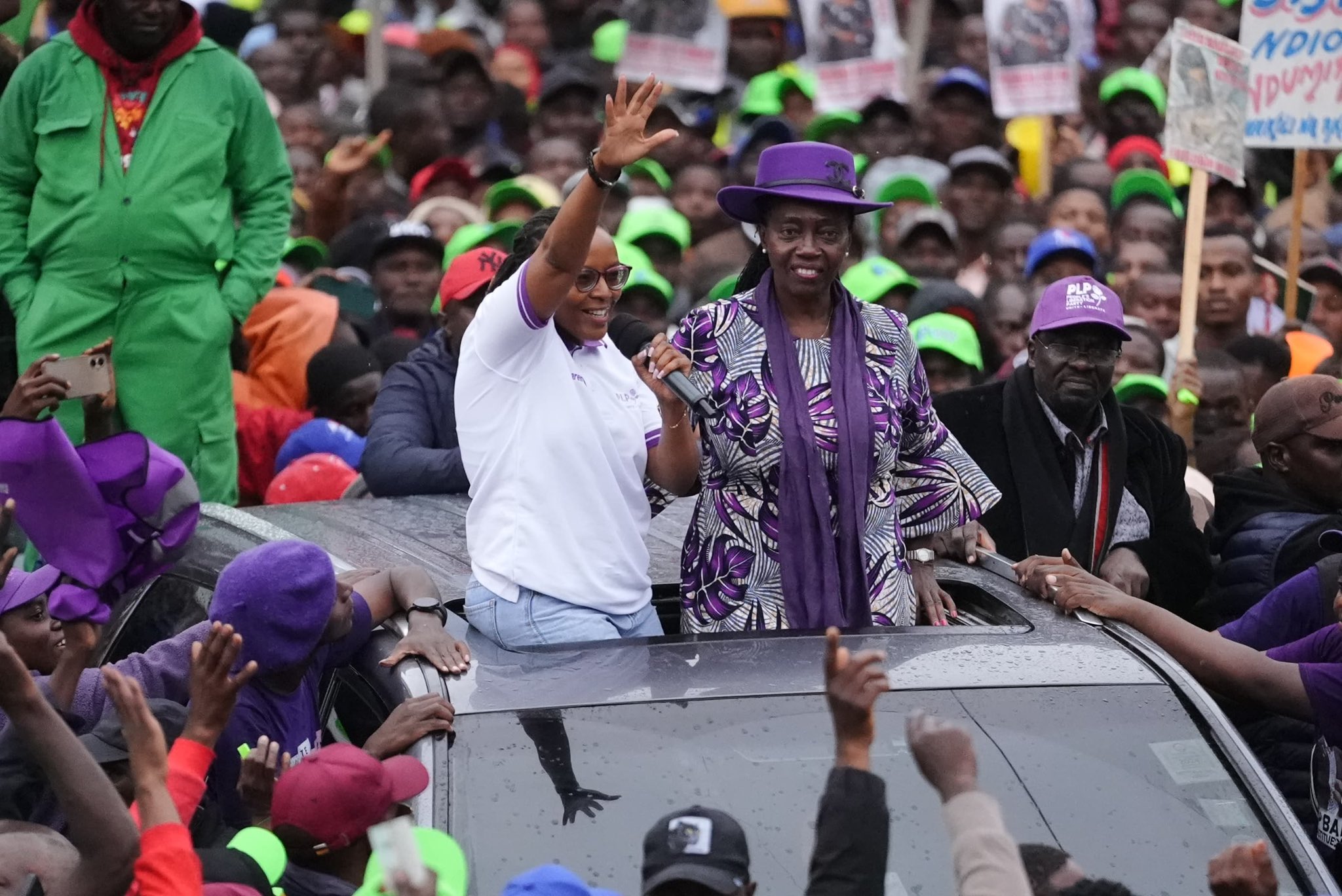
- Today’s women leaders build on foundations laid decades ago. African societies were familiar with women in positions of authority, often making significant decisions, settling disputes, and guiding social and economic matters.
In the spirit of celebrating women even after International Women’s Day on March 8, 2026, we acknowledge their stance in politics.
Women are increasingly stepping into the limelight of leadership.
Figures such as Nakuru Governor Susan Kihika, People’s Liberation Party (PLP) leader Martha Karua, Homa Bay Governor Gladys Wanga, Kirinyaga Governor Anne Waiguru, Subukia Ward Member of the County Assembly (MCA) Isabella Makori, Bahati Ward MCA Grace Mwathi, and Suba North Member of Parliament (MP) Millie Odhiambo stand as strong pillars in government, law‑making, and public voice in Kenya.
Records from the Ministry of Gender, Culture and Children Services, State Department for Gender Affairs and Affirmative Action, show that women currently hold 23–24 percent of seats in Parliament, 82 in the National Assembly and 21 in the Senate.
The nation is still striving to achieve the constitutional two‑thirds gender rule, but the numbers have risen compared to a decade ago. Notably, the number of women elected as governors increased to seven in 2022, up from three in 2017. Women also occupy about one‑third of seats in County Assemblies, according to United Nations (UN) Women Africa.
Today’s women leaders build on foundations laid decades ago. African societies were familiar with women in positions of authority, often making significant decisions, settling disputes, and guiding social and economic matters.
The Kenya Studies Review (Summer 2020) records examples such as Mang’ana nyar Ugwe of Kadem, a powerful Luo medicine woman who became a chief; Prophetess Moraa of Gusiiland, who foretold the arrival of colonialists; and Wangari wa Makeri, the only female Kikuyu chief, remembered for ruling with an iron fist.
Colonial rule introduced a patriarchal regime that displaced women from formal political authority. Yet women remained powerful in the independence struggle providing fighters with information, medicine, and food, and in some cases joining the battle directly. Field Marshal Muthoni Kirima stands out as the only woman to rise to the rank of marshal in the Mau Mau uprising.
After independence, women continued to push for democracy and inclusion. Leaders like Martha Karua and Nobel laureate Wangari Maathai championed multi‑party democracy and accountability in the 1990s. Karua remains active today, playing a central role in the United Alternative Government.
Kenya also made a mark globally by hosting the UN World Conference on Women in Nairobi in 1985, where Margaret Kenyatta served as president of the conference.
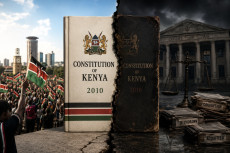
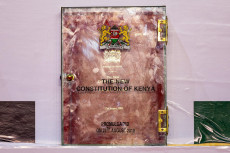
According to the Kenya Studies Review (2020), such movements helped pave the way for constitutional reforms, culminating in the 2010 Constitution, which enshrined the two‑thirds gender rule.
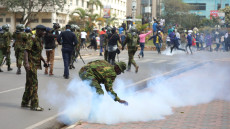
Despite progress, challenges persist. UN Women reports highlight barriers such as limited campaign financing, gender‑based political violence, and entrenched stereotypes.
Even so, the growing number of women leaders signals that the decades‑long struggle for representation continues to reshape Kenya’s politics—election after election, generation after generation.