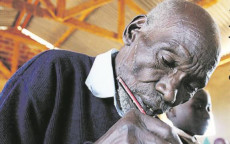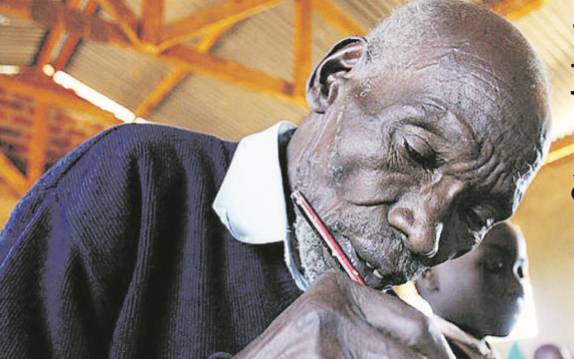
- In 2004, Kimani Maruge enrolled in primary school at age 84, after Kenya introduced free primary education. His story captured global attention, inspiring the film ‘The First Grader’ in 2011 and a Google Doodle in 2015. Maruge became a symbol of lifelong learning, proving that literacy belongs to every age.
The name Duncan Kibet has become familiar in Kenya’s recent headlines. In January 2026, at just 27 years old, he walked more than 200 kilometers from Bomet to Nairobi, determined to find support for his university education.
After completing KCSE in 2015, he spent over a decade working casual jobs and supporting his younger sibling through school before finally chasing his own dream. His endurance moved Mount Kenya University to offer him unconditional admission and hostel accommodation to pursue a Bachelor of Education degree.
Kibet’s journey joins a powerful Kenyan tradition of learners who refuse to surrender to circumstance.
In 2004, Kimani Maruge enrolled in primary school at age 84, after Kenya introduced free primary education. His story captured global attention, inspiring the film ‘The First Grader’ in 2011 and a Google Doodle in 2015. Maruge became a symbol of lifelong learning, proving that literacy belongs to every age.
Priscilla Sitienei, known affectionately as “Gogo,” began primary school in her late 80s. She made headlines in 2015, drew international coverage in 2021, and continued learning until her passing in November 2022 at age 99. Her story reminded the world that education is not bound by age.
Read More
Adult learners like Aden Gab also embody this hunger for knowledge. At 45, he entered school, later sitting for KCSE in 2023. His determination showed that middle age is no barrier to learning.
Then there is Mathew Nyamlori, who spent 22 years in primary school, sitting KCPE nine times. His persistence became a national talking point, with features in 2021 and updates in 2025. His journey reflected the sheer resilience required to overcome systemic barriers.
Patrick Muriithi returned to school after 22 years away, proving that education can be reclaimed even after decades. His story, featured in 2021, highlighted the courage it takes to restart.
Together, these lives illustrate a broader Kenyan narrative: education pursued against the odds. They show that learning is not only about classrooms and exams—it is about resilience, dignity, and hope.
Globally, UNESCO reports that hundreds of millions of adults still lack basic literacy skills, especially women and marginalized groups. Adult learning programs and literacy campaigns aim to bridge these gaps, underscoring that education is both a personal quest and a collective responsibility.
The stories of Kibet, Maruge, Sitienei, Gab, Nyamlori, and Muriithi remind us that access to learning is a human right. Their journeys demand empathy, structural support, and community solidarity. They prove that education is hope in action—and that Kenyans will walk, wait, and work for decades if that is what it takes to secure it.
Stay connected with us on WhatsApp and TikTok for instant updates and breaking news as it happens.